
Physiotherapy Website Design: What Actually Converts Visitors Into Patients

Most physiotherapy clinic websites are built to inform. They list the services offered, show a photograph of the team, state the opening hours and provide a phone number. That is a digital brochure. It is not a physiotherapy website design that generates patients. The distinction matters commercially because every marketing channel a clinic uses eventually sends people to the website. Google Ads, Facebook Ads, local search, referrals, business cards. The conversion rate of that website multiplies or divides the return on all of it. A clinic that doubles its website conversion rate has effectively doubled the value of its entire marketing budget without spending another pound. Start From What the Visitor Is Actually Doing A person landing on a physiotherapy website is not browsing. They are in pain, they have a specific problem, and they are trying to answer three questions as quickly as possible. Can this clinic help with my specific problem? Not physiotherapy generally. Their shoulder, their back, their knee. A homepage listing twelve services answers this poorly because the visitor has to work out for themselves whether their situation fits. Can I trust them? Physiotherapy is hands-on and physically vulnerable. The trust threshold before booking is higher than for most services. How do I actually get an appointment, and how soon? If this takes more than a few seconds to work out, a meaningful proportion leave. Every element below exists to answer one of those three questions faster than a competitor’s site does. The Homepage Lead with the problem, not the clinic. A headline naming what the visitor is experiencing outperforms one naming the clinic. Someone with persistent back pain responds to language about persistent back pain, not to a welcome message. Make the next step visible without scrolling. A prominent booking option and a tappable phone number in the top area of the page. A meaningful share of visitors arrive ready to act and should not have to hunt. Show real people and the real clinic. Stock photography of models in generic clinical settings reads as generic. Photographs of the actual team in the actual treatment rooms build trust in a way stock imagery cannot. Put social proof high on the page. Specific patient outcomes rather than generic praise. A short quote describing a real recovery does more than a five star rating with no context. Route quickly to condition pages. The homepage’s job is largely to send the visitor to the page about their specific problem, so it should make that routing obvious. Condition Pages Are Where Conversion Happens This is the single biggest structural difference between a physiotherapy website that converts and one that does not. A clinic with one page listing all services competes for nothing specific and answers nobody’s actual question. A clinic with a dedicated page for each major condition it treats gives every visitor a page written for their exact situation, and gives Google a page to rank for each condition search. What belongs on a condition page: The condition named in plain language the patient would use rather than clinical terminology. An explanation of why it happens and why it is not resolving on its own. What assessment involves. What treatment involves and roughly how long recovery takes. Specific patient outcomes for that condition. A clear booking option. Why it works commercially: A visitor who arrives from an advertisement about knee pain and lands on a page about knee pain converts at a substantially higher rate than one who lands on a general homepage and has to find their way. It also means each condition page can rank independently in organic search. Our website design service builds condition-specific pages as standard for exactly this reason, and our guide on physiotherapy marketing strategy covers where this fits in the wider picture. Mobile Is the Primary Experience The large majority of physiotherapy website visits happen on a phone, frequently in the evening when someone has finally decided to do something about a problem. Speed matters more than design. A site that takes several seconds to load on mobile data loses visitors before they see anything. Heavy image files and unnecessary scripts are the usual causes. Tappable phone number. A phone number that is not a tap-to-call link on mobile creates friction at exactly the wrong moment. Short forms. Every additional field reduces completion. Name, contact detail and a brief description of the problem is sufficient for a first enquiry. Everything else can be gathered later. Thumb-reachable buttons. Booking options positioned where a thumb naturally sits rather than at the top corner of a tall page. Readable without zooming. Small text and cramped layouts are still surprisingly common on clinic sites. Trust Elements That Actually Move the Needle Named practitioners with credentials. Full names, qualifications and professional registration. Anonymous clinics feel riskier than they are. Photographs of the actual premises. Reception, waiting area, treatment rooms. This removes the anxiety of walking into an unfamiliar place, which is a genuine barrier for first-time patients. Specific patient outcomes. A quote describing a real recovery from a named condition is worth several generic testimonials. Where a patient consents to video, that is stronger still. Recent review visibility. Displaying current review content on the site, or linking clearly to the profile, addresses the trust question directly. Professional body registration. For UK clinics, HCPC registration and CSP membership are meaningful trust signals and are frequently buried rather than displayed. Registration details can be verified through the Health and Care Professions Council, and the Chartered Society of Physiotherapy publishes guidance relevant to how clinics present themselves. Transparent pricing. Not every clinic wants to publish prices. But patients search for cost constantly, and a clinic that addresses it honestly builds trust precisely because so few do. What to Remove Clinic websites are frequently improved more by deletion than by addition. Navigation clutter. Every additional menu item is another way for a visitor to leave the path toward booking. Long practice history sections on the homepage. Interesting to the
Physiotherapy Marketing: The Complete Guide for UK Clinic Owners in 2026
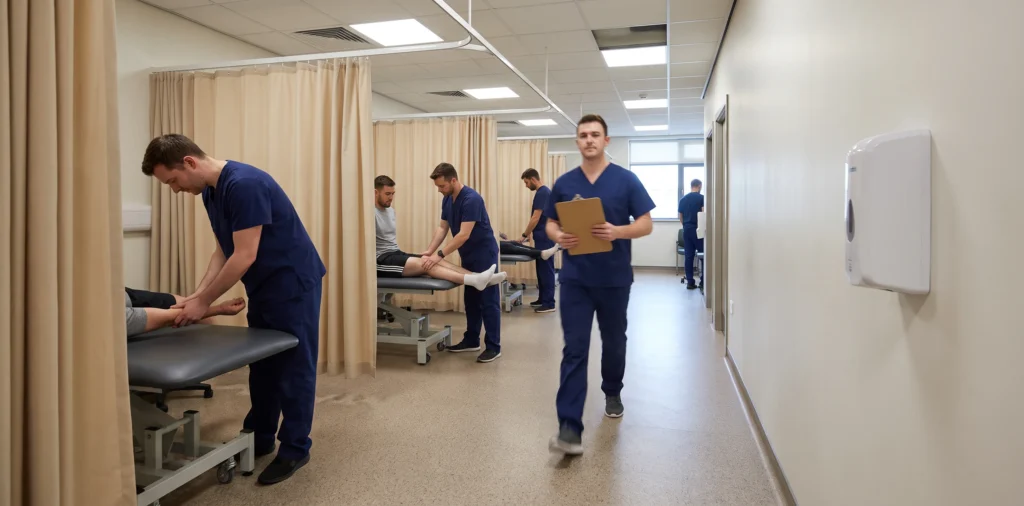
Physiotherapy marketing does not work like marketing for most service businesses, and applying general marketing advice to a clinic consistently produces disappointing results. The patient psychology is different, the regulatory environment shapes what can be said, and the geographic constraints are tighter than almost any other sector. This guide covers the complete picture for UK clinic owners: how physiotherapy patients actually make decisions, every channel that produces patients, the sequence to build them in, and the mistakes that cost clinics the most. Why Physiotherapy Patients Buy Differently They are in pain, not in the market. Nobody browses physiotherapy options casually. The journey starts when something hurts enough, or limits them enough, that they finally decide to act. The emotional state driving the search is discomfort and frustration, and marketing that acknowledges that outperforms marketing that leads with facilities and credentials. Trust is required before the first appointment. Physiotherapy is hands-on and physically intimate. A patient will be lying on a table with a stranger’s hands on them. The trust threshold before booking is considerably higher than for most services, which means credibility has to be established before contact rather than at the appointment. The market is geographically tiny. Your entire addressable audience is people within a realistic travel distance who happen to have a condition you treat at the moment they decide to seek help. This makes local visibility disproportionately valuable compared to broader brand building. The competitor is often inaction. A substantial proportion of people with treatable problems simply continue managing them. Marketing that explains why a problem is not resolving on its own expands the market rather than competing for existing demand. The Channels That Produce Patients Google search, paid and organic. The highest intent traffic available. Someone searching for a physiotherapist in your town has already decided. Both the map results and the paid positions matter, covered by our Google Ads service and our physiotherapy SEO service. Google Business Profile. For local searches, the map pack sits above the organic results and most patients choose from the first three. Completeness and recent review volume drive that ranking. Meta advertising. Reaches people experiencing symptoms who have not yet decided to seek treatment. Works through education first, booking request second. Covered by our Facebook Ads service. Content and video. Builds the clinical credibility that converts anxious researchers and improves the performance of every paid channel. Professional referrals. GPs, sports clubs, trainers and consultants. Pre-warmed patients at no media cost, but requiring active cultivation. Reviews and word of mouth. The highest quality source, influenced indirectly through treatment quality and systematic review generation. Existing and past patients. Retention, recall and reactivation, which produce appointments at a fraction of new patient acquisition cost. Condition-Specific Everything If there is one principle that separates effective physiotherapy marketing from ineffective, it is this. Marketing organised around your clinic speaks to nobody in particular. Marketing organised around specific conditions speaks directly to people experiencing them. In practice this means separate advertising campaigns for each primary condition rather than one clinic campaign. Separate landing pages for each condition rather than driving all traffic to the homepage. Content written condition by condition using the words patients actually use. Follow-up sequences that reference the specific condition the patient enquired about. The homepage is the worst destination for advertising traffic in physiotherapy. A patient who clicked an advertisement about knee pain and lands on a page listing eleven services has to find what they came for, and a meaningful proportion will not. Our website design service builds condition-specific pages for exactly this reason. The Conversion Layer Most Clinics Skip The largest single loss in most physiotherapy clinics is invisible because the lost enquiries never appear in any report. An enquiry arrives at nine in the evening. It sits in an inbox. Someone replies at eleven the following morning. The patient booked elsewhere at twenty past nine the previous evening. Automated immediate response solves this. A message within a minute using the patient’s name and their stated condition. Useful information about that condition. A direct booking link. A structured follow-up sequence for those who do not book immediately. No additional marketing spend is required. The same enquiries arrive and substantially more become appointments, which improves the return on every pound already being spent. Our guides on patient booking automation and lead automation for physiotherapy clinics cover how this is built. Reviews as Infrastructure For a physiotherapy clinic, reviews are not a soft marketing asset. They are simultaneously a ranking factor and the primary trust signal a prospective patient evaluates before booking. Recency matters as much as volume. A clinic with thirty reviews from the past three months typically outranks and outconverts one with two hundred from three years ago. The clinics with strong profiles have a system rather than good fortune. Every patient receives a request at the point of maximum satisfaction, delivered by message with a direct link rather than asked verbally at reception where the intention is quickly forgotten. Responding to every review matters too, because response rate feeds into local ranking and because prospective patients read responses to judge how the clinic handles dissatisfaction. Retention and Reactivation New patient acquisition is the most expensive route to revenue. The least expensive sits in the patients you already have. Completion of treatment. A patient who understands their full rehabilitation requirement attends more sessions than one who simply feels better and stops. This is a communication issue with direct revenue consequences. Rebooking at every visit. Patients who leave with the next appointment booked return far more reliably than those intending to call. Reactivation. Patients not seen in twelve months, segmented by condition, contacted with a message referencing their specific situation. Consistently the lowest cost per booked appointment available anywhere, covered in our guide on automated patient reactivation. Reducing missed appointments. A structured reminder sequence and easy rescheduling, covered in our guide on reducing no-shows. The Sequence That Works Weeks one to four. Automated enquiry response, systematic review requests, and a
How to Market Your Private Physiotherapy Practice in 2026
Knowing how to market your private practice means understanding that you are competing on two fronts simultaneously. Against the NHS, where the competition is on waiting time rather than price. And against other private clinics in your area, where the competition is almost entirely on trust. Neither of those is a price competition, which is why discount-led marketing consistently underperforms in private physiotherapy. This guide covers the approach that works for UK practice owners, in the order that produces results fastest. Understand Who You Are Actually Competing With The NHS. A patient choosing private physiotherapy has usually already decided that waiting is worse than paying. Your marketing does not need to argue that physiotherapy is worthwhile. It needs to make being seen quickly feel straightforward and low risk. Other private clinics. Here the patient is choosing between broadly similar services at broadly similar prices. The deciding factors are review profile, how easy you are to contact, how quickly you respond, and whether the clinician comes across as someone they would trust with a physically vulnerable situation. Doing nothing. The largest competitor for most private practices. A substantial proportion of people with treatable musculoskeletal problems simply carry on managing them. Content and advertising that addresses this group, explaining why a problem is not resolving on its own, expands the market rather than fighting over the existing one. Position Around Specificity Rather Than Breadth The instinct when marketing a private practice is to list everything you treat, on the reasoning that a wider net catches more. In practice the opposite is true. A practice that presents itself as treating all musculoskeletal conditions speaks to nobody in particular. A practice that speaks specifically about shoulder pain, or running injuries, or post-surgical rehabilitation, speaks directly to the person experiencing exactly that. This does not mean narrowing what you actually treat. It means marketing condition by condition rather than in general terms. Separate pages, separate advertising campaigns and separate content for each of your primary conditions, each written in the language patients actually use when describing the problem to themselves. Our guide on private practice marketing covers the positioning question in more depth. The Five Things That Matter Most Local search visibility. When someone in your area searches for a physiotherapist, the map results appear above everything else. A complete Google Business Profile with every service listed, current information and a steady stream of recent reviews is the highest-return single asset a private practice has. Our physiotherapy SEO service covers the wider organic picture. Review profile. Recency matters as much as volume. A practice with thirty reviews from the last three months typically outranks and outconverts one with two hundred from three years ago. Systematic requests by message at discharge, rather than verbal requests at reception, is what produces consistent volume. Response speed. Most enquiries arrive outside working hours. A practice replying the next morning is frequently replying to someone who already booked elsewhere. Automated immediate response fixes this without anyone working late, covered in our guide on patient booking automation. A website that converts. Most clinic websites inform rather than convert. A converting site speaks to the patient’s problem immediately, provides specific evidence of outcomes, and makes the next step frictionless. Our website design service builds for that purpose. Demonstrated clinical credibility. Content and video where the clinician explains a condition clearly does more to build trust before contact than any credential list. It also happens to be what makes advertising perform better. Where Advertising Fits For a private practice, advertising is not a substitute for the five things above. It amplifies them. Google Ads captures people actively searching, which is the highest intent traffic available anywhere. It works best with condition-specific campaigns pointing at condition-specific pages. Our Google Ads service is built around that structure for physiotherapy clinics. Meta advertising reaches people who have a problem but have not yet decided to act. It works through education rather than direct booking requests, which means it builds trust before asking for anything. Our Facebook Ads service covers this approach. The sequencing point is worth repeating. A practice with weak reviews, a slow response process and a homepage that does not convert will spend considerably more per acquired patient than one with those elements working. Fix them first, then advertise. Building Referral Relationships Deliberately Professional referrals produce pre-warmed patients at no media cost, and most private practices treat them passively. GP surgeries. Particularly GPs with a musculoskeletal or sports interest. What makes the difference is not a single introduction but ongoing communication about your specific expertise and clear feedback on patients they have referred. A GP refers to a physiotherapist they know rather than to physiotherapy generally. Sports clubs, gyms and personal trainers. They work daily with people who sustain the injuries you treat. Offering injury screening sessions or education talks builds the relationship in a way that a business card does not. Consultants and surgeons. Post-surgical rehabilitation referrals are valuable and typically involve longer treatment courses. This relationship is built on consistent clinical outcomes and clear communication rather than on marketing. Existing patients. The highest quality referral source and the one most practices never ask systematically. A structured process for requesting referrals converts goodwill into patients reliably. What to Avoid Competing on price. Attracts patients who are making a price decision, who complete fewer sessions and refer less. It also caps what you can afford to spend on acquisition, which puts you at a permanent disadvantage against practices competing on value. Discount offers as an entry point. A free consultation removes risk without devaluing the service. A discounted course of treatment devalues it. Marketing to everyone. Broad positioning speaks to nobody. Condition-specific marketing consistently outperforms it. Relying entirely on referrals. Comfortable and vulnerable. A practice with no independent acquisition capability has no lever to pull when referral volume drops. Ignoring the follow-up gap. Most practices lose more revenue to slow enquiry response than to any marketing weakness, and it is the cheapest thing
New Patient Acquisition: How to Fill Your Physiotherapy Clinic Every Month
New patient acquisition is where most physiotherapy clinic owners focus their marketing attention, and it is frequently not where their actual problem sits. A clinic generating forty enquiries a month and converting eight of them does not have an acquisition problem. It has a conversion problem wearing an acquisition costume. This guide covers how new patient acquisition actually works for UK physiotherapy clinics, how to tell whether it is genuinely your constraint, and the system that produces predictable monthly patient numbers rather than unpredictable peaks and troughs. First, Confirm It Is Actually Your Problem Before spending anything on acquisition, work out these four numbers for a typical month. Enquiries received across all channels including phone, website, social and walk-in. Most clinics have never counted this accurately. Enquiries that became booked appointments. The gap between this and the number above is usually far larger than owners expect. Booked appointments that were attended. Missed appointments are patients you acquired and then lost. Patients who returned for a second appointment. A clinic where most patients attend once needs far more new patients to stand still. If enquiry volume is low relative to your capacity, acquisition is genuinely your constraint and the rest of this guide applies. If enquiry volume is reasonable but few convert, fixing that first will produce more patients than any acquisition spend, and our guide on growing your practice covers that sequence. Why Physiotherapy Acquisition Is Different Three characteristics change the approach compared to general service marketing. The buying trigger is pain, not desire. People do not decide to try physiotherapy the way they decide to try a restaurant. Something hurts, or something is limiting them, and they finally decide to act. Marketing that speaks to that specific state substantially outperforms marketing that lists services and credentials. Trust is required before contact. Physiotherapy is hands-on and physically intimate. The trust threshold before a first booking is higher than for most services, which means demonstrating clinical credibility before the enquiry matters more than it does elsewhere. The market is geographically tiny. Your entire addressable audience is people within a realistic travel radius who happen to be experiencing a condition you treat at the moment they decide to act. This makes local visibility and precise targeting disproportionately important. The Channels That Produce New Patients Google search. The highest intent channel available. Someone typing physiotherapist near me or knee pain treatment plus your town has already decided they want help. Appearing at the top of that search at that moment converts better than anything else. Both the paid and organic positions matter, covered by our Google Ads service and our physiotherapy SEO service. Google Business Profile. For local physiotherapy searches the map results appear above the organic listings, and most people choose from the first three. A fully completed profile with consistent recent reviews is among the highest-return assets a clinic has. Meta advertising. Reaches people who have symptoms but have not yet decided to seek treatment. Works through education rather than direct booking requests, building awareness and trust before the ask. Covered by our Facebook Ads service. Professional referral relationships. GPs, sports clubs, personal trainers and consultants. These produce pre-warmed patients at no media cost, but they require active cultivation rather than passive hope. Word of mouth and reviews. The highest quality channel and the one clinics influence most indirectly, through treatment quality and systematic review generation. Condition-Specific Beats Clinic-Specific This is the single largest improvement available to most clinics running advertising. An advertisement promoting your clinic speaks to nobody in particular. An advertisement about shoulder pain that is disrupting sleep speaks directly to a person experiencing exactly that at exactly that moment. In practice this means separate campaigns for each of your primary conditions, each with its own ad copy written in the language patients actually use, and each pointing to a dedicated landing page about that condition rather than to a general homepage. The homepage is the worst destination for advertising traffic. A patient who clicked an ad about knee pain and arrives on a page listing eleven services has to find what they came for themselves, and a meaningful proportion will not bother. Our website design service builds condition-specific landing pages for exactly this reason. Making the First Step Small Physiotherapy carries a first-appointment barrier that many clinics never address. A patient who has never had physiotherapy does not know what an assessment involves, whether it will hurt, how long it takes or whether it will help. Asking them to book and pay for a full assessment as their first interaction asks a lot. A low-commitment entry point removes that barrier. A free fifteen-minute phone consultation, a free downloadable guide about their condition, or a discounted initial assessment all reduce the perceived risk of the first step. The majority of people who take a low-commitment first step convert to a paid appointment, because the barrier was never really about money. It was about uncertainty, and the first interaction resolves it. Making Acquisition Predictable Rather Than Lumpy Most clinics experience new patient numbers as unpredictable. Good months and quiet months with no obvious explanation. Making it predictable requires three things. Multiple channels running simultaneously. A clinic dependent on a single source is vulnerable to any change in that source. Search, social and referral running together smooths the variation. Measurement at each stage. Enquiries by source, conversion rate by source, cost per booked patient by source. Without these numbers, adjustments are guesswork. A reactivation layer filling the gaps. Past patients contacted systematically fill quiet periods without requiring additional acquisition spend. Our guide on automated patient reactivation covers this. Once those three are in place, a clinic can genuinely increase or decrease new patient volume deliberately rather than waiting to see what the month brings. What Acquisition Should Cost The honest answer is that cost per acquired patient is only meaningful when compared against patient lifetime value rather than against the fee for a single appointment. A clinic that judges acquisition
WhatsApp Patient Follow-Up for Physiotherapy Clinics: The Complete Guide

Email open rates for healthcare communication sit low and continue falling. SMS performs better. Messaging apps perform better again, and in practical terms most patients now read a message within minutes of receiving it while an email may sit unopened for days. WhatsApp patient follow-up takes advantage of that behaviour. For a physiotherapy clinic it addresses the two biggest operational leaks at once: enquiries that go cold before anyone responds, and appointments that are missed because a single reminder was not enough. This guide covers how UK clinics set it up properly, what to send, the compliance considerations that matter, and where it makes the largest difference. Why Messaging Outperforms Email for Clinics It gets read. A message notification appears on a locked screen and is typically read within minutes. An email arrives in an inbox alongside dozens of others and frequently is not opened at all. It gets replied to. Replying to a message takes seconds. Replying to an email feels like a task. For a clinic trying to convert an enquiry into a booking, that difference in friction is decisive. It suits how patients already communicate. Most people now use messaging as their default channel for everything else in their life. Requiring them to phone during working hours or send an email introduces friction that a competitor without that friction will not. It works outside office hours. A patient who thinks about their shoulder at ten at night will not phone. They will message, if messaging is available. That last point matters more than clinics expect. A significant proportion of physiotherapy enquiries occur in the evening, and messaging is often the only channel that captures them at the moment of intent. Where It Makes the Biggest Difference Initial enquiry response. A message within minutes of a web enquiry, using the patient’s name and referencing the condition they asked about, converts substantially better than a phone call the next morning. Our guide on patient booking automation covers the wider automation this sits inside. Appointment reminders. Message reminders are read reliably where email reminders are frequently missed entirely. This is one of the most direct interventions available for reducing missed appointments, covered in our guide on reducing no-shows. Post-appointment check-ins. A short message a few days after an initial assessment asking how the patient is getting on improves both rebooking rates and the patient’s sense of being cared for. Home exercise support. Sending a short video of the specific exercise prescribed, rather than a printed sheet the patient will lose, measurably improves adherence. Review requests. A message with a direct link sent shortly after discharge produces considerably more reviews than a verbal request at reception. Reactivation. A message to a patient not seen in twelve months is read. An email to the same patient frequently is not. Our guide on automated patient reactivation covers this in detail. Setting It Up Properly Use a business messaging account rather than a personal number. This matters for several reasons. Multiple staff can access it, conversations are retained when someone leaves, automated responses can be configured, and clinicians are not giving out their personal mobile numbers. Integrate it with your patient system. Standalone messaging means someone has to manually check and respond. Integration means enquiries trigger automated messages and replies appear alongside the patient record. This is the difference between a channel that works and one that becomes another inbox nobody monitors. Configure automated first responses. Every enquiry receives an immediate acknowledgement with the patient’s name and their stated concern, plus a booking link. This happens regardless of the time of day. Set up reminder sequences. Confirmation on booking, a reminder forty-eight hours before, and a short reminder on the morning of the appointment. Establish response expectations for the team. Messaging creates an expectation of quick replies. A clinic that enables it and then responds in two days damages trust rather than building it. Define who monitors it and within what timeframe. Add a visible messaging option everywhere. Website, Google Business Profile, social profiles and email signatures. Many patients who will not call will message. What to Actually Send The tone that works reads like a clinic communicating rather than a business marketing. Keep messages short. Two or three sentences. Long messages get skimmed or ignored on a phone screen. Use their name and their condition. Generic messages perform substantially worse than ones that reference why the person got in touch. One clear action per message. A booking link, a reply request, or a specific question. Multiple asks in one message reduce response rates. Write the way a person speaks. Overly formal templated language reads as automated and reduces replies. Natural phrasing performs better. Always leave a route to a human. Every automated message should make replying easy and make it clear a person will respond. Patients should never feel trapped in an automated loop. Do not over-message. A clinic that messages weekly generates opt-outs. Frequency should feel like a clinic keeping in touch, not a business chasing. Compliance Considerations Patient communication by messaging is entirely workable within UK requirements, but it needs setting up deliberately rather than casually. Consent. Patients should have agreed to be contacted by messaging, with that consent recorded. This is usually captured at registration or at first enquiry. Opt-out. Every marketing-type message, including reactivation, needs a clear and easy way to stop receiving them. Appointment reminders for booked care are treated differently from marketing but the distinction should be understood rather than assumed. Clinical information. Messaging is appropriate for logistics, reminders, general guidance and exercise support. It is not the appropriate channel for detailed clinical information, test results or anything sensitive. Those conversations belong in an appointment or a phone call. Record keeping. Messages that form part of the patient record should be retained appropriately. Using a business platform rather than personal phones makes this manageable. Data handling. Where patient information is stored and who has access to it should be understood and documented. The Information Commissioner’s Office
Lead Automation for Physiotherapy Clinics: The Complete 2026 Guide
Most physiotherapy clinics have a lead problem they cannot see. Enquiries arrive through four or five different channels, land in different places, get handled inconsistently depending on who is at the desk, and a meaningful proportion are never followed up at all. Lead automation for physiotherapy clinics solves this by routing every enquiry into one system and applying the same immediate, structured follow-up to each one regardless of when it arrives or who is working. This guide covers what the system consists of, how the pieces connect, and what changes once it is running. Where Physiotherapy Leads Actually Leak Before building anything, it is worth being clear about where the losses occur, because the fixes are specific. Multiple uncoordinated channels. Website form to one inbox, Facebook lead form to a notification nobody checks, Google Ads call extension to a phone that rings out during treatment, WhatsApp to someone’s personal phone. Each channel handled differently, some barely handled at all. Out of hours arrivals. A large proportion of enquiries arrive in the evening or at weekends. Without automation these wait until the next working day, by which point many have booked elsewhere. Inconsistent handling. One receptionist calls back within the hour with full context. Another sends a brief email. The patient experience varies by who happened to be on shift. Single-touch follow-up. Most clinics attempt contact once. If the patient does not answer or does not reply, the enquiry is effectively abandoned. A significant proportion of conversions come on the second or third contact. No visibility. Without a system, nobody can answer how many enquiries arrived last month, how many became appointments, or which channel produced them. Decisions get made on impression rather than data. What Lead Automation Consists Of Unified capture. Every channel feeds into one system. Website forms, social lead forms, call tracking, messaging and manual entry from phone enquiries all land in the same place with the same fields. Immediate acknowledgement. Within a minute of arrival, an automated message goes out using the patient’s name and referencing the condition they enquired about, regardless of the hour. Condition-based tagging. The enquiry is tagged automatically based on what the patient indicated. This determines which follow-up sequence they receive, because generic follow-up converts considerably worse than condition-specific follow-up. Structured multi-touch follow-up. A sequence of messages over several days rather than a single attempt, spaced deliberately rather than clustered. Task creation. Alongside the automated messages, a task appears for the team with the patient’s details and enquiry context attached, so a human call requires no preparation or information hunting. Pipeline tracking. Every enquiry moves through defined stages from received through to booked and attended, which makes drop-off points visible. Source attribution. Each enquiry is tagged with where it came from, so the clinic can see which channels produce booked patients rather than just clicks. This all sits on the platform layer covered in our guide to GoHighLevel for physiotherapy clinics. Designing the Follow-Up Sequence The sequence is where most of the value sits, and the details matter. Message one, immediate. Acknowledgement using the patient’s name and their stated condition, with a booking link. Sent within a minute regardless of the time. Message two, a few hours later or next morning. Useful information about their specific condition and what an assessment involves. This addresses the anxiety that causes hesitation, particularly for patients who have never had physiotherapy. Message three, day two. A different angle. Often a short note about what happens if the problem is left, or a brief patient outcome relevant to their condition. Message four, day four. A direct but low pressure check asking whether they still want to be seen and offering to answer any questions. Then a longer interval nurture. Patients who do not convert within the first week move to a lower frequency sequence rather than being abandoned entirely. Some book weeks later when the problem worsens. Three principles govern the whole sequence. Every message references their specific condition. Every message has one clear action. Every message makes replying to a human easy. Qualification Without Friction Some clinics attempt to qualify leads by asking a series of questions before booking. This usually reduces conversion more than it improves lead quality. The workable approach is to capture the minimum at enquiry, which is name, contact, and the condition or body area, then qualify during the conversation rather than through a form. Where qualification genuinely matters, for example distinguishing an insurance-funded patient from a self-funding one, or identifying a presentation that needs onward referral rather than physiotherapy, that can be handled through one or two conditional questions in the automated sequence rather than through a lengthy form at the point of enquiry. The principle is that friction at the point of enquiry costs more than it saves. What Changes Once It Is Running Conversion from enquiry to booking improves. This is the headline change and it happens without generating a single additional enquiry. The same marketing spend produces more appointments. Out of hours enquiries stop being lost. Evening and weekend enquiries previously converted at a much lower rate than working hours ones. Automation largely closes that gap. Handling becomes consistent. Every patient receives the same quality of initial response regardless of who is working or how busy the desk is. Staff time shifts to higher value work. Reception spends less time on initial enquiry admin and more time with patients physically present. Decisions become data-based. With source attribution and pipeline visibility, the clinic can see which channels produce booked patients and allocate budget accordingly rather than by impression. Nothing falls through. The most consistent feedback from clinics after implementation is not about conversion percentages. It is that they stopped discovering enquiries from three days earlier sitting unanswered. Common Mistakes Automating without personalising. A message that does not use the patient’s name or reference their condition performs barely better than no message. Personalisation is the difference between the sequence working and not. Too many messages too quickly. Four messages in
How to Reduce No-Shows in Your Physiotherapy Clinic: The Proven System

A no-show costs a physiotherapy clinic twice. There is the lost fee for the missed appointment, and there is the clinical slot that could have gone to another patient who is currently waiting. Across a year, a clinic running even a modest no-show rate is losing a meaningful proportion of its potential revenue to appointments that simply never happened. The encouraging part is that no-shows are largely a systems problem rather than a patient problem, and the systems that fix them are straightforward to implement. This guide covers why patients actually miss appointments, the reminder structure that works, the policy decisions that matter, and how to reduce no-shows in a physiotherapy clinic without adding administrative burden. Why Patients Actually Miss Appointments Understanding the real reasons matters because different causes need different solutions. They forgot. By far the most common reason, particularly for appointments booked more than a week in advance. This is not carelessness. An appointment booked on a Monday for the following Thursday competes with everything else in a person’s life. Symptoms improved. A patient whose pain settled between booking and attending frequently decides the appointment is no longer necessary. Clinically this is often wrong, because symptom resolution rarely means the underlying problem is resolved, but the patient does not know that. Something came up. Work, childcare, transport. Genuine conflicts that would have resulted in a rescheduled appointment if the patient had an easy way to reschedule rather than simply not turning up. Anxiety or uncertainty. Particularly for a first appointment, some patients quietly avoid rather than cancel. This is more common than clinics assume and is addressable with the right pre-appointment communication. They booked with more than one clinic. For urgent problems, some patients book multiple appointments and attend whichever comes first, without cancelling the others. The Reminder Structure That Works The single highest-return intervention to reduce no-shows is a properly structured reminder sequence. Not one reminder. A sequence. Immediate confirmation on booking. Sent within seconds of the appointment being made, containing the date, time, address and what to bring. This anchors the appointment as real rather than provisional. Forty-eight hours before. The critical reminder. This is far enough ahead that a patient with a conflict can reschedule rather than simply not attend, and close enough that it is not forgotten again. This message should make rescheduling genuinely easy, ideally by replying to the message. Morning of the appointment. A short reminder including the time and address. This catches the patient who remembered on Tuesday and forgot again by Thursday morning. Two reminders substantially outperform one. Three, spaced as above, outperform two. Beyond that the returns diminish and the messages start to feel intrusive. Make Rescheduling Easier Than Not Attending This is the principle that changes no-show behaviour more than any other. A patient with a genuine conflict has two options: contact the clinic to reschedule, or simply not turn up. If rescheduling requires calling during working hours and waiting for someone to answer, and not turning up requires nothing at all, a proportion of patients will take the easier path. The fix is making rescheduling frictionless. A reply to the reminder message. A link that opens live availability. A simple instruction that says reply with a new day if this one no longer works. Clinics that implement easy rescheduling frequently find their no-show rate drops while their cancellation rate rises. That is a good outcome, not a bad one. A cancelled slot with twenty-four hours notice can be filled. A no-show cannot. Reduce the Booking Window Where Possible The further ahead an appointment is booked, the more likely it is to be missed. For initial assessments this is largely within the clinic’s control. A patient who enquires today and is offered an appointment in ten days has substantially more opportunity to forget, improve, or book elsewhere than one offered an appointment in two days. This is one of the practical arguments for holding some short-notice availability rather than booking the diary out entirely. It also connects directly to the enquiry response speed covered in our guide on patient booking automation, because a patient booked within hours of enquiring is far more likely to attend than one booked a fortnight later. For follow-up appointments, booking the next session before the patient leaves the clinic is significantly more effective than asking them to call. Attendance rates for appointments booked in person at the end of a session are consistently higher than for those booked later by phone. Address the Improved Symptoms Problem Directly A meaningful proportion of physiotherapy no-shows are patients who feel better and conclude the appointment is unnecessary. This is a communication problem rather than a reminder problem. The patient does not understand that symptom improvement and tissue recovery are different things, and that stopping treatment at the point pain resolves is precisely how conditions recur. The solution sits at the initial assessment. A clear explanation of the treatment plan, what each stage is for, and specifically why continuing past the point of feeling better matters, reduces this category of no-show substantially. Reinforcing it in the reminder message helps too. A line acknowledging that patients often feel better between appointments and explaining why the next session still matters addresses the thought at exactly the moment the patient is having it. Policy Decisions That Affect No-Show Rates Cancellation policy. Clinics with a clearly communicated policy typically see lower no-show rates than those without, largely because the policy signals that appointments have value. The policy needs to be stated at booking rather than only mentioned after a missed appointment. Deposits for initial assessments. Some clinics take a small deposit at booking, redeemable against the appointment fee. This reduces no-shows noticeably, particularly among patients who book with multiple clinics. It also introduces friction at the booking stage, so it needs weighing against conversion rate. Waiting list for short-notice slots. A list of patients who have indicated they would take a cancellation means a slot freed at twenty-four hours notice
Automated Patient Reactivation: The Cheapest Growth Lever in Your Clinic

Every established physiotherapy clinic is sitting on a list of several hundred people who have already trusted them, already paid them, and already know exactly where the clinic is. Most of those people have not been back in over a year, and most clinics do absolutely nothing with that list. Automated patient reactivation is the process of systematically contacting that group and inviting them back. It is consistently the lowest cost per booked appointment of any marketing activity available to a clinic, because you are not paying to acquire trust that already exists. This guide covers how to segment the database, what to actually send, the timing that works, and why most clinics get considerably less from reactivation than they should. Why Reactivation Outperforms New Patient Acquisition The economics are straightforward. Acquiring a genuinely new patient requires advertising spend, a landing page, a follow-up sequence and a conversion process that starts from zero trust. Reactivating a past patient requires a message. Past patients also convert at a higher rate and typically require less persuasion, because the barriers that stop a new patient booking have already been removed. They know the clinic, they know the clinician, they know what an appointment involves and they know roughly what it costs. There is also a clinical argument that sits alongside the commercial one. A significant proportion of musculoskeletal conditions recur or leave residual limitation. Patients who stopped attending frequently did so because the acute pain settled rather than because they had fully recovered. A well-written reactivation message often reaches someone who has been quietly managing a problem that could be resolved. Segmenting the Database Properly Sending the same message to everyone who has ever attended produces poor results. Segmentation is where reactivation succeeds or fails. By time since last visit. Six months, twelve months and twenty-four months represent meaningfully different groups. Someone six months out may simply have drifted. Someone two years out has effectively lapsed and needs a different approach. By condition treated. A patient treated for lower back pain should receive a message about back pain, not a generic clinic newsletter. Condition-specific reactivation consistently outperforms generic messaging by a wide margin. By how treatment ended. A patient discharged having completed their plan is different from one who stopped attending midway. The second group frequently has an unresolved problem and responds well to a message acknowledging that. By value. Patients who completed a full course of treatment and attended reliably are worth more effort than one-off attendees who never returned after an initial assessment. Exclusions matter. Anyone currently under treatment, anyone who has opted out of marketing contact, and anyone flagged for clinical reasons should be excluded automatically rather than manually. What to Actually Send The message that works does not read like marketing. It reads like a clinic checking in. Lead with the condition, not the offer. A message that opens by referencing the problem the patient came in with lands very differently from one that opens with an offer. The patient recognises their own situation immediately. Acknowledge the time gap naturally. Something along the lines of noticing it has been a while since their last visit and wondering how the shoulder has been holding up. This is how a clinician would actually phrase it. Give a reason to respond now. Not artificial urgency, but a genuine one. Winter aggravating old back problems. The start of a running season. A gap in the diary this month. A specific reason performs considerably better than an open invitation. Make the next step small. A reply to the message, or a link to book, rather than asking them to call during working hours. Friction at this point loses a meaningful proportion of interested people. Keep it short. Reactivation messages that run to several paragraphs perform worse than three or four sentences. The goal is a reply, not a full explanation. The Timing and Cadence That Works Automated patient reactivation works on a rolling basis rather than as an occasional campaign. The most effective structure runs continuously. Every patient automatically enters the reactivation sequence at set intervals after their last appointment, which means the clinic is contacting a small number of people every week rather than blasting the entire database twice a year. A workable rhythm looks like this. At around three months post-discharge, a check-in message asking how they are getting on. At around eight months, a condition-relevant message with something genuinely useful. At around twelve months, a more direct reactivation message. Then annually thereafter with a light touch. Two or three messages spaced across several days works better than a single message, because most responses to reactivation come on the second or third contact rather than the first. Frequency discipline matters. A clinic that messages its database monthly will generate opt-outs and erode goodwill. The interval should feel like a clinic keeping in touch, not a business chasing sales. Why Most Clinics Get Poor Results From Reactivation They send it once and stop. A single campaign to the whole database produces a spike of bookings and then nothing. Continuous automated reactivation produces a steady flow indefinitely. They use generic messaging. A message that could have been sent to anyone gets the response rate of a message sent to nobody in particular. Condition-specific messaging is the single largest driver of response rate. They lead with discounts. Price-led reactivation attracts patients who were price sensitive in the first place and devalues the service for everyone else. A clinically framed message outperforms a discount message in both response rate and patient quality. They make responding difficult. A message that asks the patient to call during working hours loses everyone who reads it in the evening. A direct booking link or a simple reply-to-book instruction converts far better. They do not exclude properly. Sending a reactivation message to someone who attended last week, or to someone who has opted out, damages trust and creates avoidable complaints. They never review it. Reading the actual replies reveals what
AI Receptionist for Physiotherapy Clinics: The Honest 2026 Guide

Most physiotherapy clinics miss more calls than they realise. Calls during treatment sessions when nobody is at the desk. Calls at lunchtime. Calls after closing. Calls on Sunday afternoon when someone has finally decided to sort out the shoulder that has been bothering them since March. An AI receptionist for physiotherapy clinics answers every one of those calls. It holds a spoken conversation, answers common questions, and in most cases books the appointment before the caller has any reason to try the next clinic on their list. This guide covers what the technology genuinely does well in a clinic context, where it falls short, and how UK clinics deploy it without damaging the patient experience. What an AI Receptionist Actually Does An AI receptionist for physiotherapy clinics is a voice system that answers inbound calls with a synthetic voice and conducts a natural spoken conversation with the caller. In a properly configured clinic deployment it handles several things reliably. It answers immediately rather than ringing out. It identifies why the person is calling. It answers routine questions about opening hours, location, parking, whether the clinic treats a particular condition, and what an initial assessment involves. It checks live calendar availability and books an appointment directly. It captures the caller’s details and the reason for calling when a booking is not appropriate. It sends a confirmation by text before the call ends. Where the call falls outside what it can handle, a well-configured system takes a message with full context and flags it for a human callback rather than attempting to improvise. Where It Genuinely Adds Value After-hours coverage. This is the clearest and least disputed use case. A clinic that previously sent evening and weekend calls to voicemail now answers every one. Given that a meaningful proportion of physiotherapy enquiries happen outside working hours, this captures revenue that was simply being lost. Calls during treatment. In a small clinic where the clinician is also the receptionist, calls during sessions go unanswered. An AI receptionist covers those hours without interrupting patient care. Overflow at busy periods. Monday mornings and post-holiday periods generate call volumes that overwhelm a single reception desk. The AI handles the overflow rather than callers hearing an engaged tone. Consistency. It asks the same qualifying questions every time, captures the same information, and never has an off day. For a clinic where enquiry handling quality varies between staff members, this consistency has real value. Where It Falls Short Being straight about the limitations is more useful than overselling the capability. Emotionally sensitive calls. A patient in significant pain, someone distressed about a diagnosis, or a caller who is frustrated about a previous experience all need human judgement. An AI handling these calls produces an experience that damages rather than builds trust. Complex clinical questions. A caller asking whether physiotherapy is appropriate for their specific presentation, or how their condition interacts with another health issue, needs a clinician. The AI should recognise this and route rather than attempt an answer. Accent and audio quality variation. Performance varies with strong regional accents, background noise and poor mobile connections. In practice this means testing against your actual patient population rather than assuming it will work uniformly. Caller preference. Some patients respond well to efficient handling. Others react negatively to not reaching a person, particularly older demographics who form a significant proportion of many physiotherapy caseloads. This varies enough that clinics should monitor it rather than assume. Anything unusual. By definition the AI handles what it was configured for. Genuinely unusual calls produce generic responses that leave the caller unsatisfied. The Sensible Deployment Model The clinics getting good results from an AI receptionist for physiotherapy clinics almost all deploy it the same way, and it is not as a wholesale replacement for reception. Human first during working hours. Calls ring to reception as normal. The AI picks up only when the call is unanswered after a set number of rings, which means it covers the desk being busy without replacing it. AI first outside working hours. Evenings, weekends and holidays go straight to the AI rather than to voicemail. Clear escalation rules. The AI is explicitly configured to take a message and arrange a human callback for anything involving clinical judgement, distress, complaints, or questions outside its scope. This should be a deliberate instruction rather than a hope. Transparency with the caller. The system should not pretend to be human. Clinics that are straightforward about it generally see better patient reactions than those where the caller works it out and feels misled. Human review of transcripts. Reading the actual conversations, particularly in the first month, reveals gaps in configuration that are invisible during setup. What Configuration Actually Involves The difference between a system that works and one that gets switched off after a month is almost entirely configuration quality. A thorough knowledge base. The AI performs in direct proportion to what it has been told. That means services offered, conditions treated, what is not treated, opening hours, location and parking detail, what an assessment involves, how long appointments last, cancellation policy, and how to handle the questions that come up most often. Defined conversation boundaries. Explicit instructions on what to do when it does not know something, when to escalate, and when to simply take a message. Calendar integration. For booking to work, the system needs live access to real availability with correct appointment durations and clinician assignments. Voice and tone matched to the clinic. A brisk efficient tone suits some practices. A slower reassuring tone suits clinics treating older or more anxious patients. This is configurable and worth getting right. Refinement over the first month. Expect two or three rounds of adjustment based on real calls. No configuration is right first time. How It Fits With the Rest of the System An AI receptionist for physiotherapy clinics works best as one component rather than in isolation. It sits alongside the text-based automation covered in our guide to patient booking automation,
Patient Booking Automation for Physiotherapy Clinics: The Complete Guide
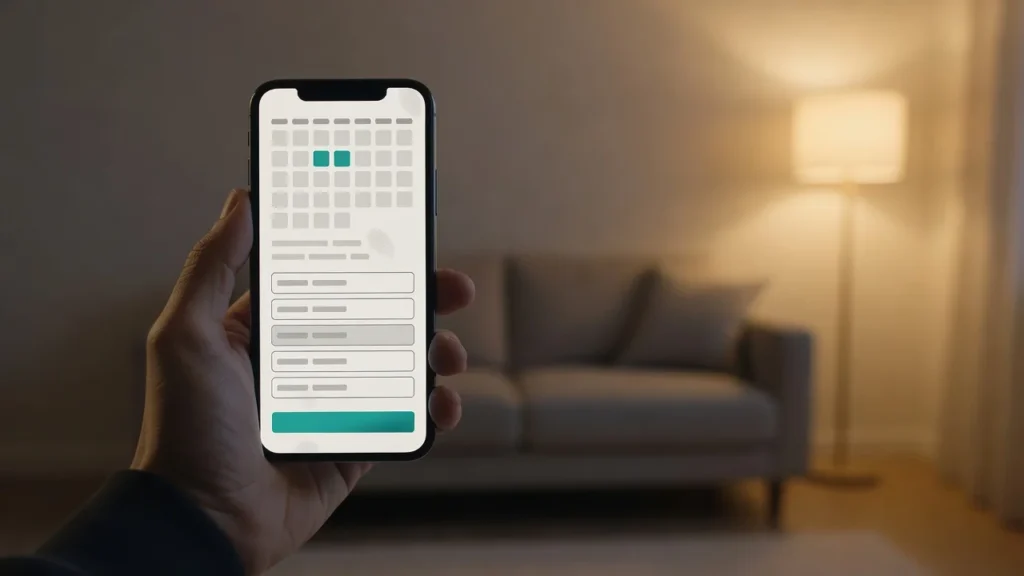
The majority of physiotherapy enquiries arrive outside clinic hours. Evenings, weekends, and the moments when someone finally decides to do something about the pain they have been ignoring for six weeks. Almost none of those enquiries get a response until the following working day. Patient booking automation closes that gap. It responds within seconds regardless of the hour, holds a useful exchange with the patient, and in many cases has the appointment confirmed before a member of staff has seen the enquiry at all. This guide covers exactly how UK physiotherapy clinics set this up, what each component does, and what it changes about the numbers. Why the Response Gap Costs So Much A patient enquiring about physiotherapy is usually contacting more than one clinic. They are in discomfort, they want it resolved, and they are not running a careful comparison process. In most cases they book with whoever responds first and sounds competent. The clinic that replies at nine the next morning is frequently replying to someone who booked elsewhere at ten past nine the previous evening. This is not a marketing problem. The enquiry was generated successfully. It is an operations problem, and it is the single most common reason a clinic’s advertising appears to underperform. The ads are working. The response time is not. Patient booking automation addresses this without requiring anyone to answer messages at eleven at night. The Components of a Booking Automation System Instant acknowledgement. Within sixty seconds of an enquiry, an SMS goes out using the patient’s name and referencing the specific condition they mentioned. This alone changes the patient’s perception from waiting to being handled. Condition-specific information. An email follows containing genuinely useful content about their condition and an explanation of what an assessment involves. This addresses the anxiety that causes hesitation, particularly for patients who have never had physiotherapy before. Direct booking link. The message contains a link to live availability. The patient selects a slot themselves without needing to call during working hours. For a patient enquiring at ten at night, this is the difference between booking now and intending to call tomorrow. Confirmation and reminders. On booking, an immediate confirmation is sent. A reminder follows forty-eight hours before, and another on the morning of the appointment. This sequence reduces no-shows substantially. Follow-up for non-bookers. Patients who enquire but do not book enter a structured sequence over the following several days. Most conversions from this group happen on the second or third touch rather than the first. Task creation for the team. Alongside the automated messages, a task appears in the system with the patient’s details and enquiry context so a human call can be made without anyone hunting for information. What Changes in the Numbers The effect of patient booking automation shows up in four measurable places. Conversion from enquiry to booked appointment. This is the headline change. Clinics implementing instant response typically see a substantial improvement in the proportion of enquiries that become appointments, using the same enquiry volume and the same advertising spend. Out-of-hours conversion specifically. Enquiries arriving after six in the evening or at weekends previously converted at a much lower rate than those arriving during working hours. With automation the gap largely closes. No-show rate. The reminder sequence reduces missed appointments. For a clinic where each no-show represents both lost revenue and a wasted clinical slot, this has a direct financial effect. Staff time on administration. Reception time spent on initial enquiry response, confirmation calls and reminder calls reduces considerably, freeing that time for patients physically present in the clinic. Setting It Up Properly Map the enquiry sources first. Website form, Facebook lead form, Google Ads call extension, phone, walk-in. Each needs to feed into the same system so nothing sits in a separate inbox. Write the messages in the clinic’s voice. Automated does not have to mean robotic. The best-performing sequences read like a message a person would send. Overly formal or obviously templated messages perform noticeably worse. Segment by condition from the first message. A back pain enquiry and a shoulder enquiry should receive different content. Generic follow-up converts considerably worse than condition-specific follow-up. Set the timing deliberately. Instant for the first message. A few hours for the second. Then daily for two or three days before moving to a longer nurture interval. Too aggressive feels like pressure. Too slow loses the moment. Always leave a human route. Every automated message should make it easy to reply and reach a person. Automation handles the first response and the routine steps. It should never trap a patient in a loop with no way to speak to someone. Test it yourself. Submit an enquiry through every channel and experience the sequence as a patient would. Errors are obvious from the patient side and invisible from the admin side. Where Clinics Get It Wrong Automating without personalising. A message that says thank you for your enquiry with no reference to who the person is or what they asked about performs barely better than no message at all. The name and the condition need to be in the first line. Too many messages too quickly. A sequence that sends four messages in six hours reads as desperate and generates opt-outs. Spacing matters. No route to a human. Patients with a specific question who cannot get an answer from the automation and cannot easily reach a person will simply go elsewhere. Setting it up and never reviewing it. Reading actual conversations for the first month reveals gaps that were invisible at setup. Most sequences need two or three rounds of adjustment before they perform properly. Ignoring the non-booker sequence. Most clinics build the instant response and stop there. The follow-up sequence for people who enquired and did not book is where a significant proportion of additional appointments come from. How It Fits With Everything Else Patient booking automation multiplies the value of every other marketing activity rather than operating independently. Advertising becomes more efficient because a higher