WhatsApp Patient Follow-Up for Physiotherapy Clinics: The Complete Guide
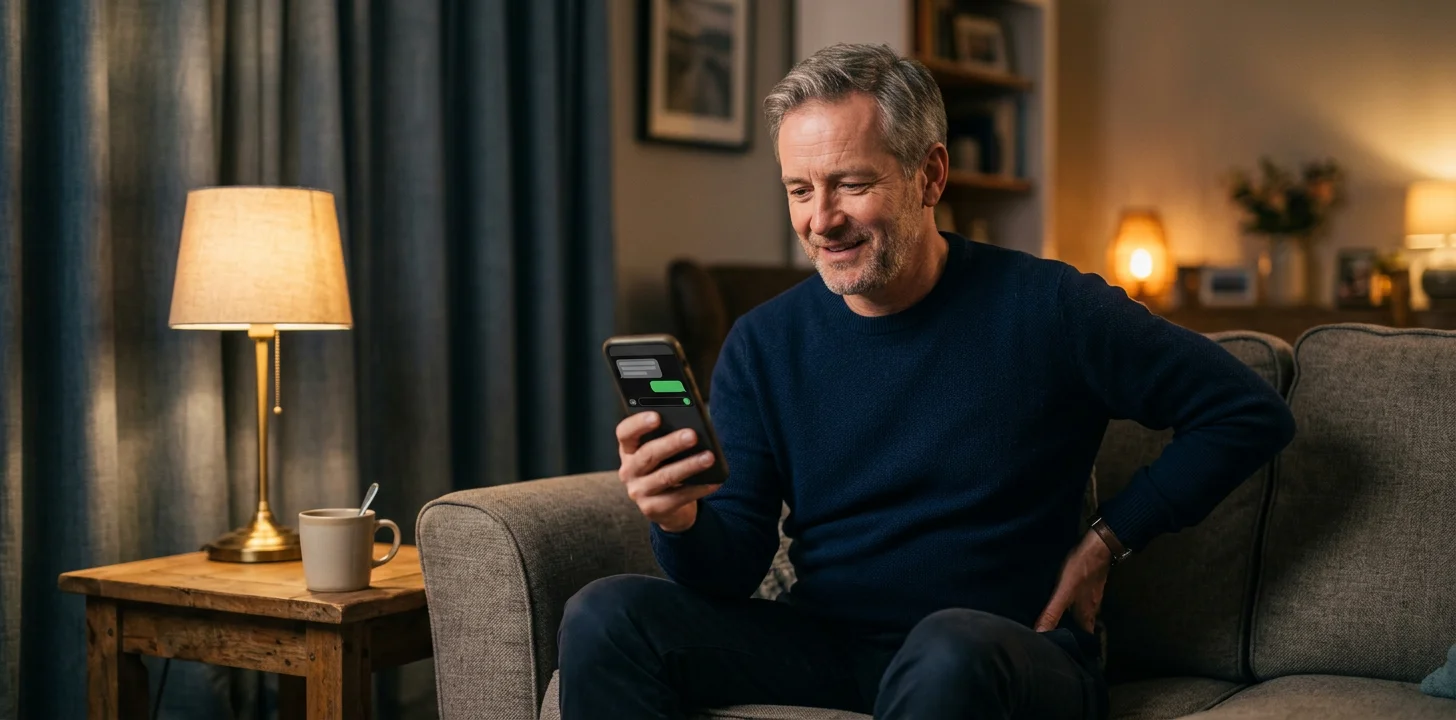
Email open rates for healthcare communication sit low and continue falling. SMS performs better. Messaging apps perform better again, and in practical terms most patients now read a message within minutes of receiving it while an email may sit unopened for days.
WhatsApp patient follow-up takes advantage of that behaviour. For a physiotherapy clinic it addresses the two biggest operational leaks at once: enquiries that go cold before anyone responds, and appointments that are missed because a single reminder was not enough.
This guide covers how UK clinics set it up properly, what to send, the compliance considerations that matter, and where it makes the largest difference.
Why Messaging Outperforms Email for Clinics
It gets read. A message notification appears on a locked screen and is typically read within minutes. An email arrives in an inbox alongside dozens of others and frequently is not opened at all.
It gets replied to. Replying to a message takes seconds. Replying to an email feels like a task. For a clinic trying to convert an enquiry into a booking, that difference in friction is decisive.
It suits how patients already communicate. Most people now use messaging as their default channel for everything else in their life. Requiring them to phone during working hours or send an email introduces friction that a competitor without that friction will not.
It works outside office hours. A patient who thinks about their shoulder at ten at night will not phone. They will message, if messaging is available.
That last point matters more than clinics expect. A significant proportion of physiotherapy enquiries occur in the evening, and messaging is often the only channel that captures them at the moment of intent.
Where It Makes the Biggest Difference
Initial enquiry response. A message within minutes of a web enquiry, using the patient’s name and referencing the condition they asked about, converts substantially better than a phone call the next morning. Our guide on patient booking automation covers the wider automation this sits inside.
Appointment reminders. Message reminders are read reliably where email reminders are frequently missed entirely. This is one of the most direct interventions available for reducing missed appointments, covered in our guide on reducing no-shows.
Post-appointment check-ins. A short message a few days after an initial assessment asking how the patient is getting on improves both rebooking rates and the patient’s sense of being cared for.
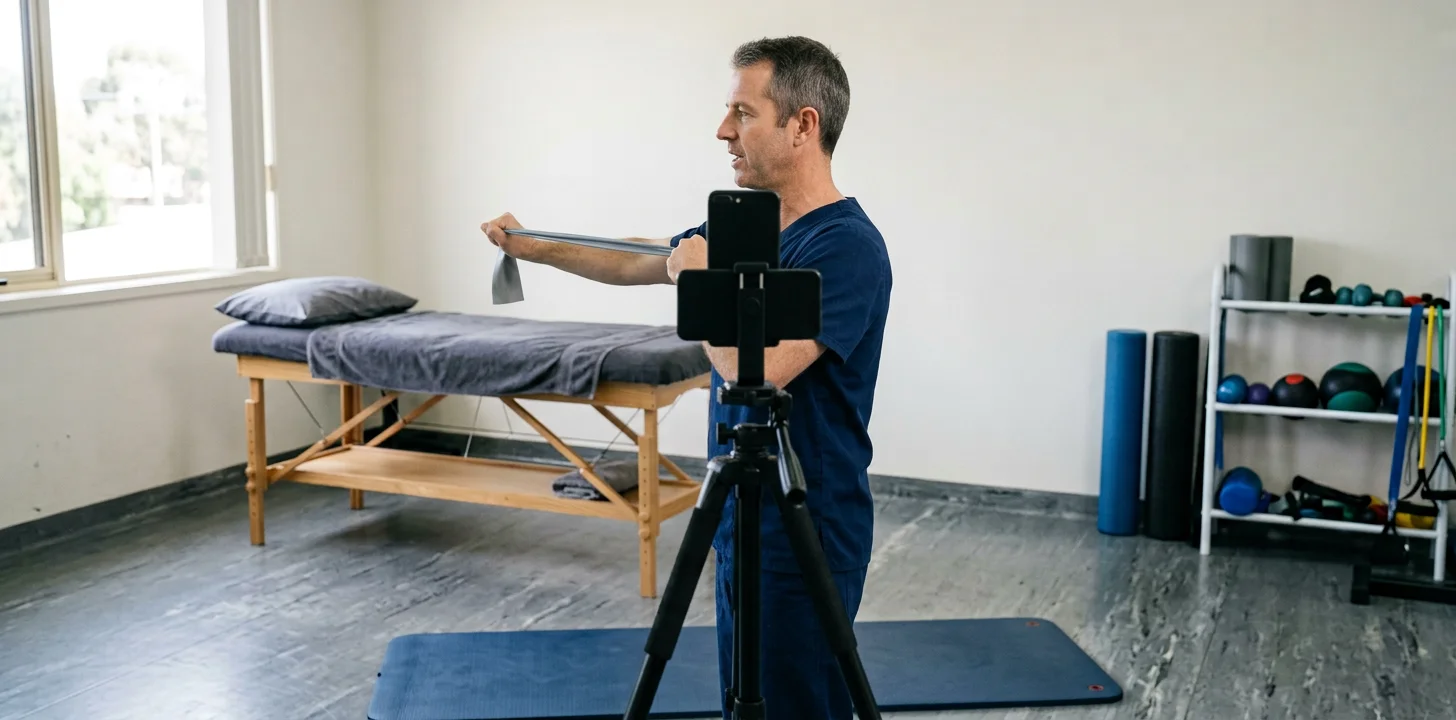
Home exercise support. Sending a short video of the specific exercise prescribed, rather than a printed sheet the patient will lose, measurably improves adherence.
Review requests. A message with a direct link sent shortly after discharge produces considerably more reviews than a verbal request at reception.
Reactivation. A message to a patient not seen in twelve months is read. An email to the same patient frequently is not. Our guide on automated patient reactivation covers this in detail.
Setting It Up Properly
Use a business messaging account rather than a personal number. This matters for several reasons. Multiple staff can access it, conversations are retained when someone leaves, automated responses can be configured, and clinicians are not giving out their personal mobile numbers.
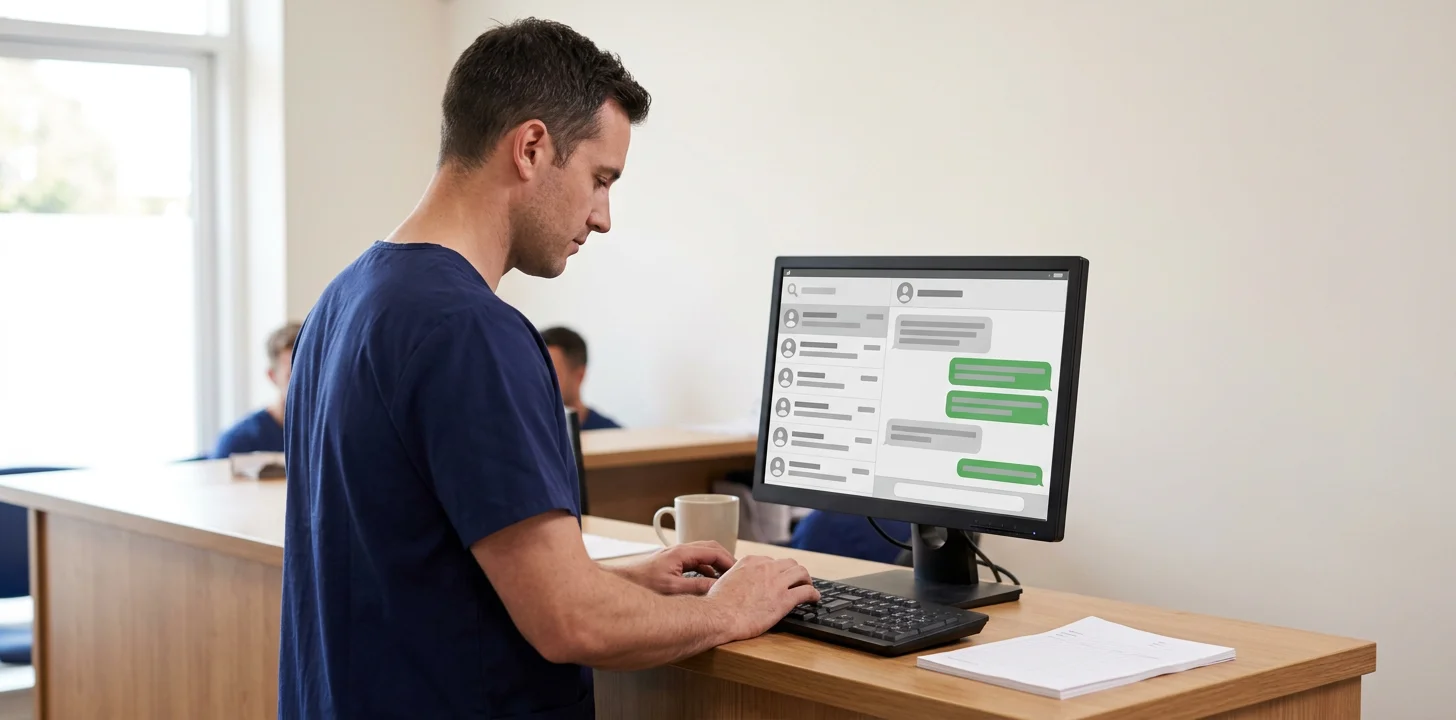
Integrate it with your patient system. Standalone messaging means someone has to manually check and respond. Integration means enquiries trigger automated messages and replies appear alongside the patient record. This is the difference between a channel that works and one that becomes another inbox nobody monitors.
Configure automated first responses. Every enquiry receives an immediate acknowledgement with the patient’s name and their stated concern, plus a booking link. This happens regardless of the time of day.
Set up reminder sequences. Confirmation on booking, a reminder forty-eight hours before, and a short reminder on the morning of the appointment.
Establish response expectations for the team. Messaging creates an expectation of quick replies. A clinic that enables it and then responds in two days damages trust rather than building it. Define who monitors it and within what timeframe.
Add a visible messaging option everywhere. Website, Google Business Profile, social profiles and email signatures. Many patients who will not call will message.
What to Actually Send
The tone that works reads like a clinic communicating rather than a business marketing.
Keep messages short. Two or three sentences. Long messages get skimmed or ignored on a phone screen.
Use their name and their condition. Generic messages perform substantially worse than ones that reference why the person got in touch.
One clear action per message. A booking link, a reply request, or a specific question. Multiple asks in one message reduce response rates.
Write the way a person speaks. Overly formal templated language reads as automated and reduces replies. Natural phrasing performs better.
Always leave a route to a human. Every automated message should make replying easy and make it clear a person will respond. Patients should never feel trapped in an automated loop.
Do not over-message. A clinic that messages weekly generates opt-outs. Frequency should feel like a clinic keeping in touch, not a business chasing.
Compliance Considerations
Patient communication by messaging is entirely workable within UK requirements, but it needs setting up deliberately rather than casually.
Consent. Patients should have agreed to be contacted by messaging, with that consent recorded. This is usually captured at registration or at first enquiry.
Opt-out. Every marketing-type message, including reactivation, needs a clear and easy way to stop receiving them. Appointment reminders for booked care are treated differently from marketing but the distinction should be understood rather than assumed.
Clinical information. Messaging is appropriate for logistics, reminders, general guidance and exercise support. It is not the appropriate channel for detailed clinical information, test results or anything sensitive. Those conversations belong in an appointment or a phone call.
Record keeping. Messages that form part of the patient record should be retained appropriately. Using a business platform rather than personal phones makes this manageable.
Data handling. Where patient information is stored and who has access to it should be understood and documented. The Information Commissioner’s Office publishes the UK requirements, and the Chartered Society of Physiotherapy provides guidance on professional standards for patient communication.
Common Mistakes
Using a personal phone. Creates data protection problems, means conversations are lost when staff leave, and blurs professional boundaries.
Enabling it without monitoring it. A messaging channel that goes unanswered for two days is worse than not offering it, because the patient has seen the message was delivered.
Sending clinical detail. Inappropriate channel for sensitive information and creates record keeping complications.
Over-automating. Patients notice when every message is templated. Automation should handle the first response and the routine reminders, with humans handling anything beyond that.
Messaging too often. Erodes goodwill quickly and produces opt-outs that cost you the channel for that patient permanently.
No consent record. Creates compliance exposure that is entirely avoidable with a checkbox at registration.
What It Changes
Clinics that implement WhatsApp patient follow-up properly typically see change in three places.
Conversion from enquiry to booked appointment improves, because enquiries are answered in minutes rather than hours and because patients can respond without phoning.
Missed appointments reduce, because reminders are actually read and because rescheduling becomes a reply rather than a phone call.
Rebooking and reactivation rates improve, because messages to past patients get read where emails do not.
None of that requires generating a single additional enquiry. It changes what happens to the enquiries and patients you already have, which is why it usually produces measurable results faster than any acquisition activity.
The channel sits on the platform layer described in our guide to GoHighLevel for physiotherapy clinics, alongside the wider conversion infrastructure covered in our guide on growing your practice.
To see results from clinics we work with, visit our reviews page, or read more about our approach on our about page.
Frequently Asked Questions
For logistics, appointment reminders, general guidance and exercise support, yes, provided consent is recorded and a business account is used. It is not appropriate for detailed clinical information, test results or sensitive discussions.
No. A business messaging account allows multiple staff access, retains conversations when staff change, supports automation, and keeps patient data appropriately separated from personal devices.
Enabling messaging creates an expectation of a quick reply. Automated acknowledgement should be immediate, with a human response within business hours the same day. A clinic that cannot sustain that should not enable the channel.
Yes, meaningfully. Message reminders are read reliably where email reminders are frequently missed. Combined with easy rescheduling by reply, the effect on missed appointments is one of the clearest returns available.
It can be, with recorded consent, clear opt-out, appropriate record keeping and a business platform rather than personal devices. Any setup should be reviewed against current ICO guidance and professional standards.