How to Reduce No-Shows in Your Physiotherapy Clinic: The Proven System
A no-show costs a physiotherapy clinic twice. There is the lost fee for the missed appointment, and there is the clinical slot that could have gone to another patient who is currently waiting. Across a year, a clinic running even a modest no-show rate is losing a meaningful proportion of its potential revenue to appointments that simply never happened.
The encouraging part is that no-shows are largely a systems problem rather than a patient problem, and the systems that fix them are straightforward to implement.
This guide covers why patients actually miss appointments, the reminder structure that works, the policy decisions that matter, and how to reduce no-shows in a physiotherapy clinic without adding administrative burden.
Why Patients Actually Miss Appointments
Understanding the real reasons matters because different causes need different solutions.
They forgot. By far the most common reason, particularly for appointments booked more than a week in advance. This is not carelessness. An appointment booked on a Monday for the following Thursday competes with everything else in a person’s life.
Symptoms improved. A patient whose pain settled between booking and attending frequently decides the appointment is no longer necessary. Clinically this is often wrong, because symptom resolution rarely means the underlying problem is resolved, but the patient does not know that.
Something came up. Work, childcare, transport. Genuine conflicts that would have resulted in a rescheduled appointment if the patient had an easy way to reschedule rather than simply not turning up.
Anxiety or uncertainty. Particularly for a first appointment, some patients quietly avoid rather than cancel. This is more common than clinics assume and is addressable with the right pre-appointment communication.
They booked with more than one clinic. For urgent problems, some patients book multiple appointments and attend whichever comes first, without cancelling the others.
The Reminder Structure That Works
The single highest-return intervention to reduce no-shows is a properly structured reminder sequence. Not one reminder. A sequence.
Immediate confirmation on booking. Sent within seconds of the appointment being made, containing the date, time, address and what to bring. This anchors the appointment as real rather than provisional.
Forty-eight hours before. The critical reminder. This is far enough ahead that a patient with a conflict can reschedule rather than simply not attend, and close enough that it is not forgotten again. This message should make rescheduling genuinely easy, ideally by replying to the message.
Morning of the appointment. A short reminder including the time and address. This catches the patient who remembered on Tuesday and forgot again by Thursday morning.
Two reminders substantially outperform one. Three, spaced as above, outperform two. Beyond that the returns diminish and the messages start to feel intrusive.
Make Rescheduling Easier Than Not Attending
This is the principle that changes no-show behaviour more than any other.
A patient with a genuine conflict has two options: contact the clinic to reschedule, or simply not turn up. If rescheduling requires calling during working hours and waiting for someone to answer, and not turning up requires nothing at all, a proportion of patients will take the easier path.
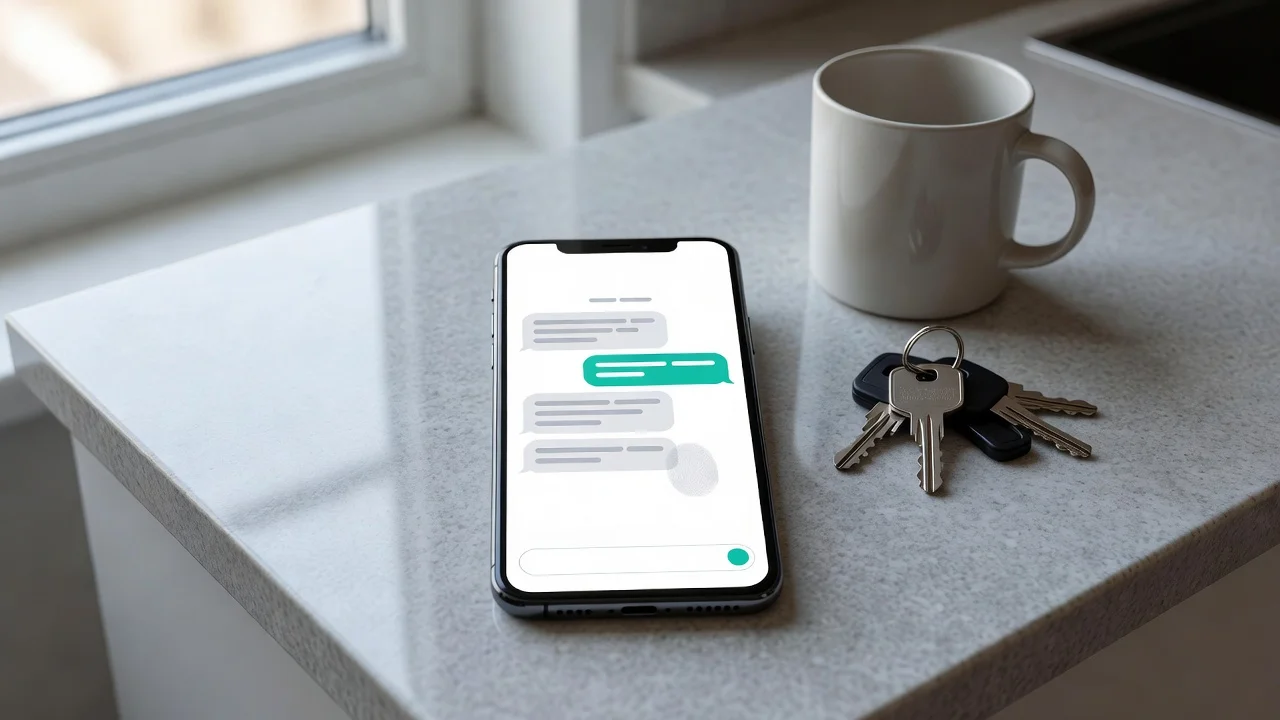
The fix is making rescheduling frictionless. A reply to the reminder message. A link that opens live availability. A simple instruction that says reply with a new day if this one no longer works.
Clinics that implement easy rescheduling frequently find their no-show rate drops while their cancellation rate rises. That is a good outcome, not a bad one. A cancelled slot with twenty-four hours notice can be filled. A no-show cannot.
Reduce the Booking Window Where Possible
The further ahead an appointment is booked, the more likely it is to be missed.
For initial assessments this is largely within the clinic’s control. A patient who enquires today and is offered an appointment in ten days has substantially more opportunity to forget, improve, or book elsewhere than one offered an appointment in two days.
This is one of the practical arguments for holding some short-notice availability rather than booking the diary out entirely. It also connects directly to the enquiry response speed covered in our guide on patient booking automation, because a patient booked within hours of enquiring is far more likely to attend than one booked a fortnight later.
For follow-up appointments, booking the next session before the patient leaves the clinic is significantly more effective than asking them to call. Attendance rates for appointments booked in person at the end of a session are consistently higher than for those booked later by phone.
Address the Improved Symptoms Problem Directly
A meaningful proportion of physiotherapy no-shows are patients who feel better and conclude the appointment is unnecessary.
This is a communication problem rather than a reminder problem. The patient does not understand that symptom improvement and tissue recovery are different things, and that stopping treatment at the point pain resolves is precisely how conditions recur.
The solution sits at the initial assessment. A clear explanation of the treatment plan, what each stage is for, and specifically why continuing past the point of feeling better matters, reduces this category of no-show substantially.
Reinforcing it in the reminder message helps too. A line acknowledging that patients often feel better between appointments and explaining why the next session still matters addresses the thought at exactly the moment the patient is having it.

Policy Decisions That Affect No-Show Rates
Cancellation policy. Clinics with a clearly communicated policy typically see lower no-show rates than those without, largely because the policy signals that appointments have value. The policy needs to be stated at booking rather than only mentioned after a missed appointment.
Deposits for initial assessments. Some clinics take a small deposit at booking, redeemable against the appointment fee. This reduces no-shows noticeably, particularly among patients who book with multiple clinics. It also introduces friction at the booking stage, so it needs weighing against conversion rate.
Waiting list for short-notice slots. A list of patients who have indicated they would take a cancellation means a slot freed at twenty-four hours notice can be filled rather than lost. This does not reduce no-shows but it substantially reduces their cost.
Follow-up on missed appointments. A same-day message to a patient who did not attend, asking if everything is alright and offering to rebook, recovers a proportion of them. Many patients who miss an appointment feel awkward about calling back and simply do not return. A message removes that barrier.
What This Is Worth
The financial case for systematically working to reduce no-shows is usually more compelling than clinic owners expect.
Consider a clinic running a modest number of missed appointments each week. Each represents a lost fee and an unfilled clinical hour. Across a year the accumulated cost is substantial, and it is entirely recoverable without generating a single additional enquiry or spending anything on advertising.
The reminder sequence itself costs very little to run. The setup is a one-off exercise. And once configured it operates without ongoing administrative time, which means it is one of the few improvements that reduces both cost and workload simultaneously.
This sits alongside the other conversion infrastructure covered in our guide on growing your practice, and runs on the platform layer described in our guide to GoHighLevel for physiotherapy clinics. For clinics also wanting to fill the gaps that do appear, our guide on automated patient reactivation covers how to bring past patients back into those slots.
To see results from clinics we work with, visit our reviews page, or read more about our approach on our about page.
Guidance on appointment management and patient communication standards is published by the Chartered Society of Physiotherapy, and NHS England publishes research on missed appointment patterns that is broadly applicable to private practice.
Frequently Asked Questions
Rates vary considerably between clinics depending on patient demographic, appointment type and reminder systems. What matters more than the benchmark is the direction of travel, and most clinics find they can reduce their existing rate meaningfully with a proper reminder sequence.
Three works best for most clinics: an immediate confirmation at booking, a reminder forty-eight hours before, and a short reminder on the morning of the appointment. Two performs noticeably better than one, and three better than two.
A clearly communicated cancellation policy typically reduces no-shows regardless of how strictly it is enforced, because it signals that appointments have value. Whether to enforce charges is a commercial and relationship judgement for each clinic.
For appointment reminders, SMS consistently outperforms email because open rates are considerably higher and messages are read sooner. Using both, with SMS as the primary channel, covers the widest range of patient preferences.
Maintaining a short-notice waiting list of patients who have indicated they would take a cancellation allows late-freed slots to be filled. An automated message to that list when a slot opens is more effective than calling through it manually.