
Facebook Ads for Physiotherapy Clinics: The Proven Structure That Books Patients
Nobody opens Facebook looking for a physiotherapist. That single fact explains why most Facebook ads for physiotherapy clinics fail, and it also explains what the ones that work do differently.
Search advertising captures people who have already decided to seek treatment. Social advertising reaches people earlier, while they are still managing a problem and assuming it will sort itself out. That audience is considerably larger, but it is not ready to be asked for a booking.
This guide covers the campaign structure that converts that audience rather than annoying it.
Why the Direct Approach Fails
The instinct is to run an advertisement saying the clinic treats back pain and inviting people to book an appointment.
That ad reaches someone who is not currently thinking about physiotherapy, has no relationship with your clinic, and is being asked to commit money and time to a hands-on clinical service on the strength of one image in a feed. The conversion rate is predictably poor, the cost per enquiry looks terrible, and clinics conclude that Facebook does not work for physiotherapy.
The channel is not the problem. The ask is too large for the stage of relationship.
The campaigns that work do three things in sequence: make the person recognise their own situation, build enough credibility to be worth listening to, and then offer a step small enough that taking it feels easy.
The Layered Campaign Structure
Layer one: problem recognition. Video or image content that names a specific experience in the patient’s own language. Waking up with a stiff shoulder every morning. Back pain that flares every time you sit for a long drive. Knee pain that appears at the same point in every run.
This layer is not selling anything. Its job is recognition and familiarity, and critically it builds the audience of people who engaged with the content, which becomes the targeting base for layer two.
Layer two: the low-commitment offer. Targeted specifically at people who engaged with layer one. This offers a step that carries low perceived risk. A free telephone consultation, a downloadable guide on managing that condition, or a discounted initial assessment.
Layer three: retargeting. Aimed at people who visited the website or began an enquiry without completing it. This layer can be considerably more direct because these people have already demonstrated genuine interest.
Running only layer two without layer one is the single most common structural mistake. It asks for commitment from an audience with no relationship to the clinic.
Creative That Works
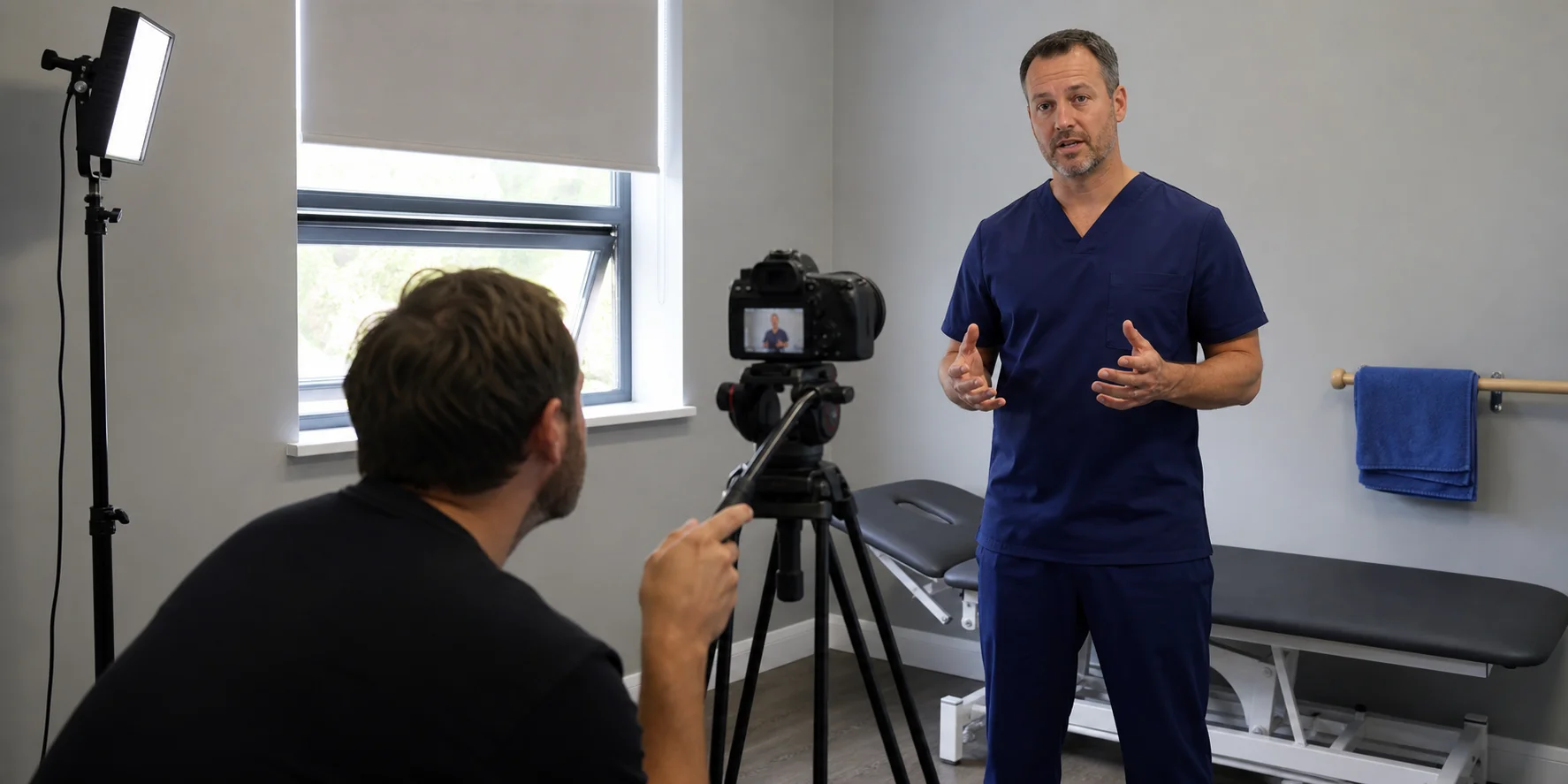
Video from the clinician outperforms everything else. A physiotherapist explaining why a specific problem happens, in plain language, builds credibility in a way an image cannot. It also answers the underlying question the viewer has, which is whether this person seems competent and reasonable.
Lead with the problem in the first three seconds. The opening determines whether anyone watches. Starting with the clinic name loses them. Starting with the specific experience they recognise keeps them.
Educational, not promotional. Content that explains why a condition is not resolving on its own, what the realistic recovery timeline looks like, and what treatment actually involves performs considerably better than content listing services.
Real clinic, real people. Footage in the actual treatment room with the actual clinician reads as authentic. Stock imagery reads as advertising and is scrolled past.
Subtitle everything. The majority of social video plays without sound. Unsubtitled video loses most of its audience immediately.
Refresh creative every four to six weeks. Performance declines predictably as the same audience sees the same content repeatedly.
Targeting
Geographic radius is the most important setting. Physiotherapy is intensely local. Five to fifteen kilometres around the clinic depending on your area. Anything wider spends money reaching people who will never attend.
Age brackets should match the condition. Content about sports injury and running problems targets a different age band from content about osteoarthritis or persistent back pain. Running one campaign for all conditions to all ages dilutes performance substantially.
Resist over-narrow interest targeting. Meta’s delivery system performs better with a reasonably broad local audience and strong creative than with a heavily restricted audience. Set geography and age correctly, then let the creative qualify.
Build audiences from your patient list. Uploading your existing patient database allows lookalike audiences of people resembling your actual patients. This is one of the most effective tools available and most clinics never use it.
Exclude current patients from acquisition campaigns. There is no reason to pay to reach people already booked with you. Run separate reactivation campaigns to that group instead, covered in our guide on automated patient reactivation.

Compliance Considerations
Healthcare advertising carries restrictions that general business advertising does not, and clinics need to work within them.
Meta restricts copy implying knowledge of personal health attributes. Ad copy that addresses the viewer as though the platform knows they have a condition can be rejected. Writing in general terms about a problem, rather than telling the viewer they have it, avoids this. Current policies are documented in the Meta Business Help Centre.
Claims must be substantiable. Language guaranteeing recovery, promising specific timelines or claiming superiority over other clinics creates exposure under UK advertising standards, published by the Advertising Standards Authority.
Professional standards apply to advertising. UK physiotherapists work under standards set by the Health and Care Professions Council, which extend to how services are promoted.
Before and after imagery carries both platform restrictions and professional considerations. Patient testimonial video generally performs better and avoids the complications.
Where the Money Leaks
No landing page match. An ad about shoulder pain landing on a general homepage forces the visitor to find the relevant content. Most will not. Our guide on physiotherapy website design covers what the destination needs.
Slow enquiry follow-up. This is where the largest amount is lost. A lead generated at nine in the evening and contacted at eleven the next morning has usually already booked elsewhere. Automated response within minutes transforms the return on identical ad spend. Our guide on patient booking automation covers this.
Judging by cost per click. Cost per booked appointment is the only figure that matters. A campaign with a higher click cost producing better quality enquiries frequently outperforms a cheaper one.
Stopping too early. Meta’s delivery system requires a learning period. Campaigns switched off after four days never get the chance to optimise.
One ad forever. Creative fatigue is real and predictable. Refresh regularly.
Facebook Alongside Search
The two channels do different jobs and work considerably better together.
Search captures existing demand from people actively looking. It produces the lowest cost per acquired patient but is limited by how many people are searching in your area at any time. Our guide on Google Ads for physiotherapy clinics covers that side.
Social creates demand among people not yet searching, which expands the total addressable audience and increases branded search volume that search campaigns then capture cheaply.
Underneath both sits conversion infrastructure. Our guide on growing your practice covers why fixing conversion before increasing traffic produces better returns, and our physiotherapy marketing strategy guide sets out the full picture.
To discuss campaigns for your clinic, read more about our Facebook Ads service, see results on our reviews page, or read about our approach on our about page.
Frequently Asked Questions
Yes, when structured in layers. Campaigns that ask a cold audience to book directly perform poorly. Campaigns that begin with educational content, build an engaged audience, then make a low-commitment offer consistently produce booked patients.
Enough to sustain delivery for at least two weeks so the campaign can gather meaningful data. Budget should be set against a target cost per booked appointment rather than an arbitrary monthly figure.
Low-commitment offers convert best from cold traffic. A free telephone consultation or a downloadable condition guide removes the risk of a first step. Heavy discounting tends to attract price-driven patients who complete fewer sessions.
They carry both platform policy restrictions and professional regulatory considerations. Patient testimonial video generally performs better and avoids those issues entirely.
Enquiries typically begin within the first few days of launch. Meaningful performance data for optimisation decisions requires around two weeks of consistent delivery.