
TikTok Marketing for Physiotherapy Clinics
In this guide
- TikTok's audience has aged up, reaching the same demographic that deals with desk-related pain and running injuries.
- Content that names a specific problem in the first three seconds consistently outperforms generic exercise lists.
- Reposting Instagram content unchanged on TikTok tends to underperform compared to platform-native filming.
- Posting consistently for four to six weeks is the minimum before judging whether TikTok is working for a clinic.
Most physiotherapy clinics that have tried TikTok fall into one of two camps: the ones who posted a handful of generic exercise clips, saw no bookings, and quietly gave up, or the ones who never tried at all because it feels like the wrong platform for a healthcare business, usually putting what budget they do have into paid social ads instead. Both reactions are understandable, but both miss what actually works, and doesn’t, when a clinic approaches TikTok correctly.
Why TikTok Is Worth a Second Look for Physio Clinics
TikTok’s audience has aged up considerably since its early years. A meaningful share of users are now in their late twenties through forties, the exact demographic dealing with desk-related back pain, running injuries, and the kind of musculoskeletal issues that bring people into a physio clinic in the first place. The platform’s search function has also become a genuine discovery tool, with people searching “why does my shoulder hurt when I” or “is it normal to” directly on TikTok the way they’d search Google.
Unlike Instagram marketing for physiotherapy clinics, where a clinic is often competing against polished, produced content, TikTok still rewards content that looks authentic and informational over content that looks like an advert. That’s a genuine advantage for a clinic with limited production resources and real clinical expertise to share.
What Actually Works
Answering a specific, searchable question in the first three seconds. “Why does my lower back hurt more in the morning” performs very differently to a generic “5 stretches for back pain” video, because it matches how people actually search and scroll. The hook has to state the problem the viewer already has, immediately.
Showing real assessment or treatment moments, not just exercise demonstrations. Clips that show a clinician explaining what they’re looking for during an assessment, in plain language, consistently outperform generic stretch-of-the-day content, because they demonstrate expertise rather than just repeating information available everywhere.
Correcting common myths directly. “You don’t need an MRI before seeing a physio” or “cracking your back doesn’t mean anything is ‘back in place'” style content performs well because it’s specific, slightly contrarian, and genuinely useful, rather than generic wellness advice.
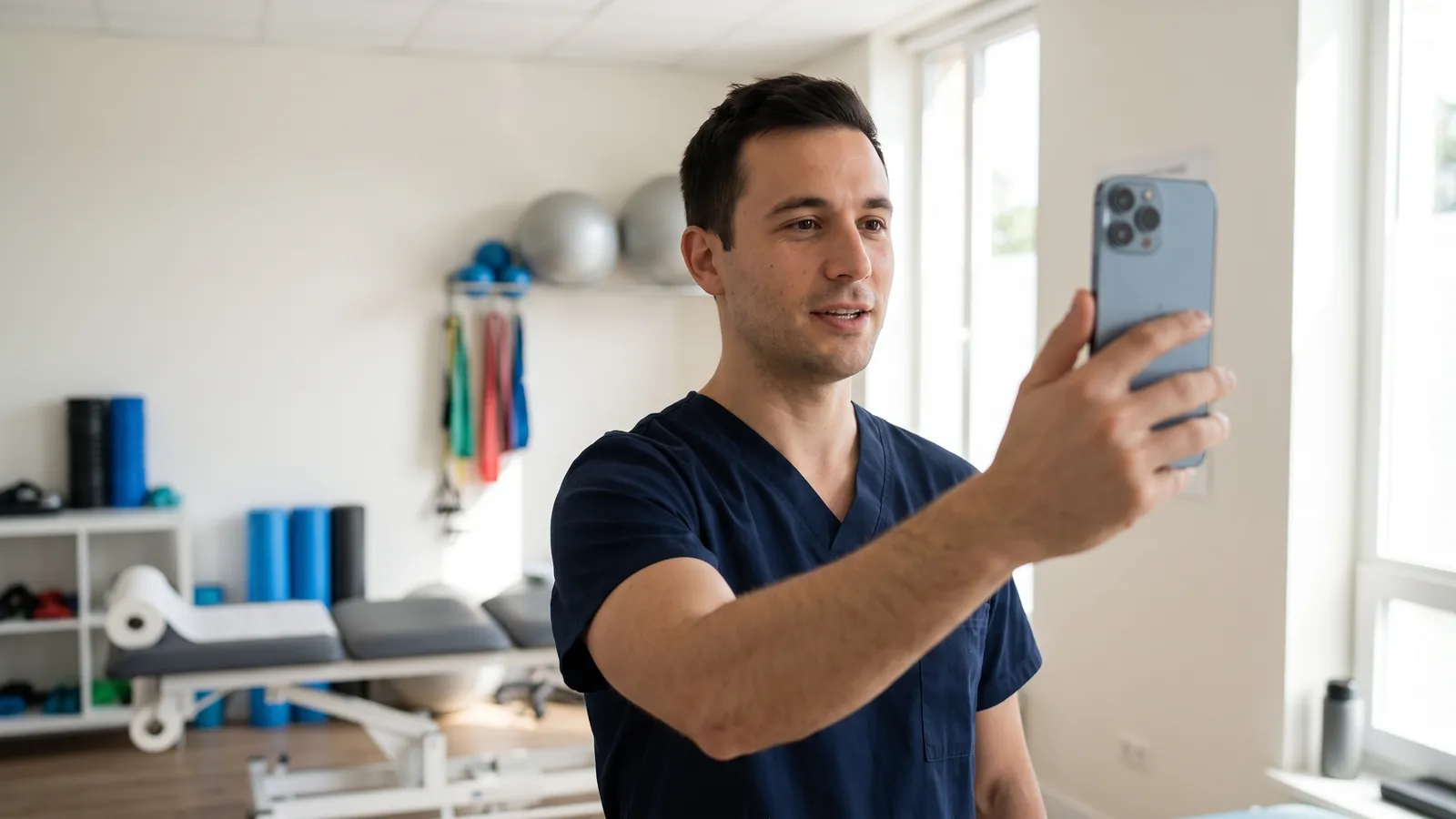
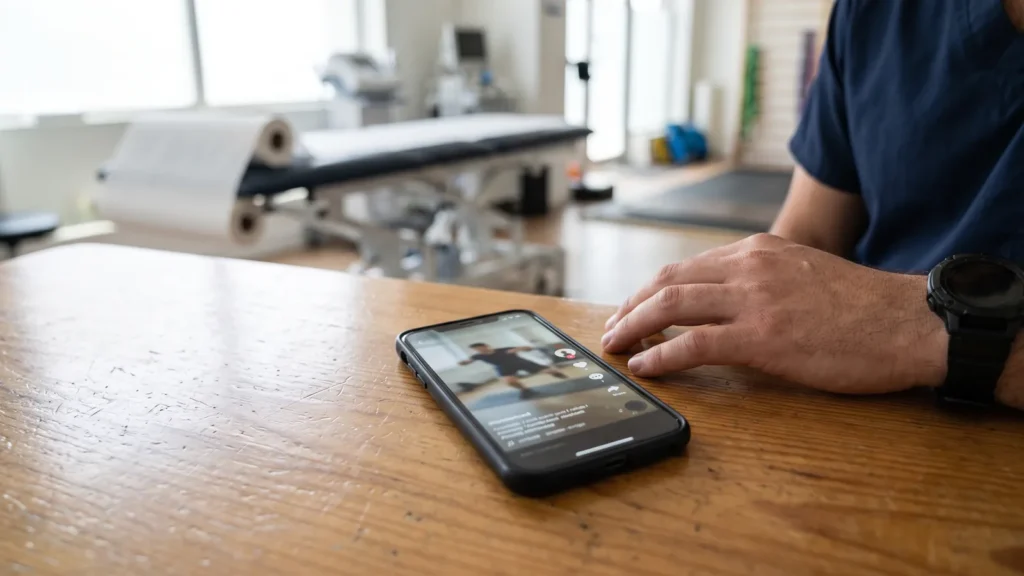
Short, native-feeling clips over polished adverts. Content filmed on a phone in the clinic, with captions and a clear hook, consistently outperforms anything that looks like a traditional advert. TikTok’s algorithm and its audience both favour content that doesn’t look like it’s trying to sell something in the first few seconds.
What Doesn't Work
Reposting the same content from Instagram unchanged. Content built for Instagram’s more polished aesthetic tends to underperform on TikTok specifically because it reads as an advert rather than native content. Format and pacing genuinely need to differ between the two platforms.
Generic “5 exercises for X” content with no hook. This format is oversaturated on TikTok specifically. Thousands of accounts post nearly identical exercise-list content, so it rarely breaks through unless there’s a specific, differentiated angle.
Posting inconsistently and judging results after two or three videos. TikTok’s algorithm needs a reasonable volume of content to learn who to show it to. A handful of videos posted sporadically over a few weeks rarely generates a meaningful read on what’s actually working.
Healthcare-Specific Considerations
Avoid making specific clinical claims or guarantees in captions or videos (such as “this will fix your back pain”), both because it’s misleading and because platforms increasingly restrict healthcare-adjacent accounts that make unverified claims. Patient examples should only ever be used with explicit, documented consent, and should avoid identifying details unless the patient has specifically agreed to be named and shown.

A Realistic Starting Approach
Start with content answering the five questions patients ask most often in clinic, filmed simply on a phone, posted consistently for at least four to six weeks before judging results. Track saves and shares alongside views, since TikTok’s algorithm weighs these more heavily than raw view count when deciding how far to distribute a video. Link the TikTok bio to a simple booking page rather than the full website homepage, since TikTok traffic rarely tolerates extra navigation steps before converting, the same reasoning behind the funnel structure in our Facebook Ads for physiotherapy clinics guide.
Frequently asked questions
For clinics willing to post consistently and create content specifically for the platform rather than repurposing Instagram content, yes. It reaches a demographic actively searching for the kind of information physios are best placed to answer, and currently has less competition from healthcare businesses than Instagram.
Three to five times a week is a reasonable starting cadence to give the algorithm enough content to learn from, though consistency over a sustained period matters more than hitting a specific number every single week.
No, and in most cases simpler, phone-filmed content performs better than polished production, since it matches what the platform's audience expects and engages with.
Yes, though most clinics see better early results focusing on organic content first to understand what resonates with their specific audience, before layering in paid promotion behind proven content.
Treating it like a smaller version of Instagram and reposting the same polished content unchanged, rather than creating content specifically paced and styled for how people actually watch and scroll on TikTok.
Keep reading
Real Funnels Ltd, 64 Nile Street, London N1 7SR · © 2026