
Video Testimonials for Physiotherapy Clinics: Why They Convert
In this guide
- Video testimonials for physiotherapy clinics reassure prospective patients in a way written reviews can't, because a real person with a similar condition is describing their own recovery.
- The best time to ask is the same moment you'd ask for a referral: at discharge, when gratitude is highest.
- A short, unscripted, genuine clip outperforms a polished, scripted one almost every time.
- Video testimonials work across every channel at once, the website, social media, and Google Business Profile.
A written review says a clinic is good. A video testimonial shows a real person, with a real condition, describing what actually happened to them. For a prospective patient trying to decide whether physiotherapy is worth it, and whether this particular clinic is the right one, that difference in trust is considerable.
Most clinics collect written reviews diligently and never once ask a happy patient to record thirty seconds on their phone. That’s a missed opportunity, because video consistently outperforms text at the exact moment a prospective patient is deciding whether to book.
Why video works differently to written reviews
A prospective patient sees themselves in the story. Someone researching treatment for a shoulder problem watching another real person describe their own shoulder recovery experiences a level of reassurance that five stars and a paragraph of text can’t fully replicate.
Tone and sincerity are harder to fake on camera. Written reviews can feel generic even when genuine. A real person’s voice, expression and hesitation while speaking read as unmistakably authentic, which is exactly why video testimonials carry more weight.
Video works across more places at once. A single clip can go on the website, get cut into a short clip for Instagram, and sit on the Google Business Profile, whereas a written review largely stays wherever it was originally posted.
It demonstrates outcomes, not just satisfaction. A patient describing “I can play golf again” or “I finally slept through the night” gives a prospective patient a concrete, relatable picture of what recovery actually looks like, which a star rating alone cannot convey.
How to actually get patients on camera
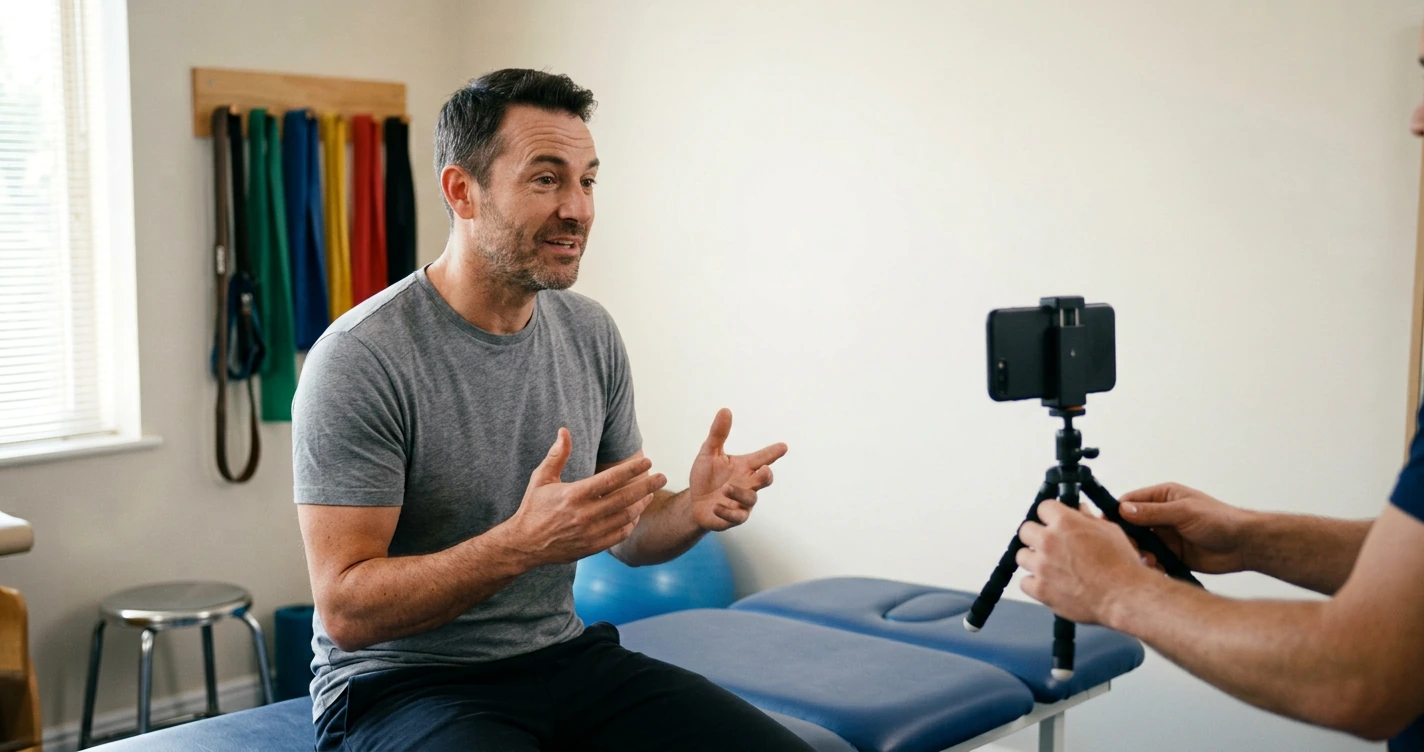
Ask at discharge, the same moment that works for referrals. Gratitude is highest right when a patient’s problem has been resolved, which is also exactly when they’re most willing to say so on camera.
Keep the ask genuinely low-pressure. “Would you mind if I grabbed thirty seconds on my phone about how things have gone?” works better than anything that sounds like a formal request, because it matches the actual size of the favour being asked.
Ask two or three simple, open questions rather than a script. What was the problem when you started, how does it feel now, and would you recommend the clinic to someone in a similar position. Unscripted answers to simple questions read as far more genuine than anything rehearsed.
Film it on a phone, in the clinic, not in a studio. The clinic setting itself adds credibility, and a slightly imperfect, real clip consistently outperforms an over-produced one for exactly the same reason a candid photo beats a stock photo.
Get clear verbal consent on camera before using it. A simple “and it’s okay if we share this on our website and social media, yeah?” captured in the clip itself is a straightforward way to have consent on record alongside any written permission.
Where to actually use them once you have them
On the homepage and relevant service pages, placed near the point where a prospective patient is deciding whether to book, not buried on a separate testimonials page nobody finds.
Cut into short clips for social media. A fifteen-to-thirty-second excerpt works well as standalone content, and our guide on Instagram marketing for physiotherapy clinics covers how this kind of content performs alongside educational posts.
On the Google Business Profile, where video content is comparatively rare and stands out against the mostly text-based reviews sitting alongside it. This connects directly to our guide on Google reviews for physiotherapy clinics.
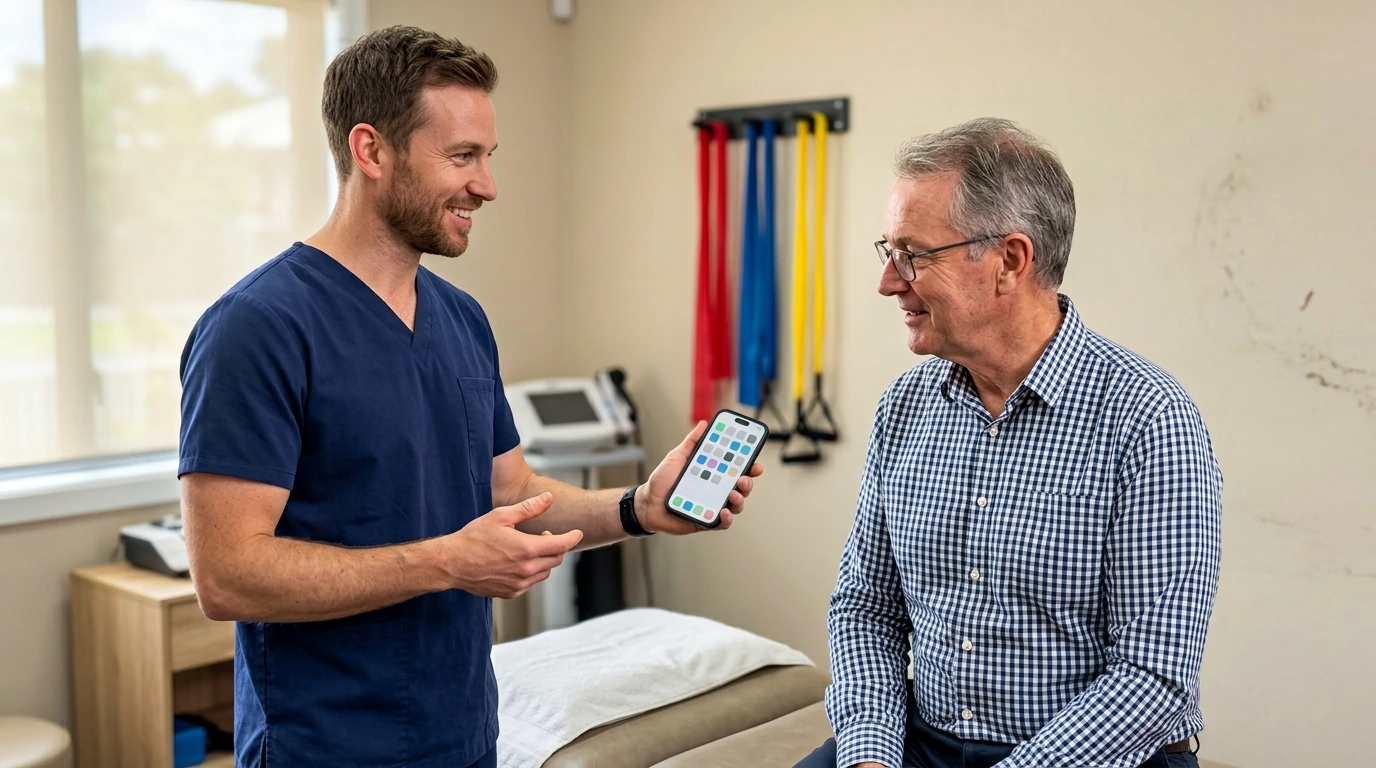
In follow-up messaging to hesitant new enquiries. A prospective patient who’s enquired but not yet booked, shown a short, relevant video of someone with a similar condition, converts at a noticeably higher rate than one who only sees a generic follow-up message.
We build video testimonial collection into the same discharge workflow that handles reviews and referrals in every GoHighLevel setup we run, so it becomes a normal, repeatable step rather than something that only happens when someone remembers to ask.
Frequently asked questions
Generally yes, because a prospective patient sees a real person describing a condition and recovery similar to their own, which builds a level of trust and relatability that written text struggles to match.
At discharge, with a simple, low-pressure request, something close to asking if they'd mind a quick thirty seconds about how things have gone, rather than a formal or scripted ask.
No. A smartphone filmed in the clinic setting itself tends to outperform a heavily produced studio version, since the authenticity of a real, slightly imperfect clip is part of what makes it convincing.
On the website near booking decision points, cut into short clips for social media, on the Google Business Profile, and in follow-up messages to prospective patients who've enquired but not yet booked.
Yes. Clear verbal consent captured on camera, alongside written permission where appropriate, is a straightforward way to have that consent on record before the clip is used anywhere publicly.
Keep reading
Real Funnels Ltd, 64 Nile Street, London N1 7SR · © 2026